Bhutan Tour 4 Nights 5 Days 2026–2028 | Culture, Monasteries & Himalayan Landscapes
Discover the extraordinary charm of Bhutan on a 4 Nights 5 Days Bhutan Tour 2026–2028, an immersive journey through dramatic Himalayan landscapes, ancient Buddhist monasteries, historic dzongs, peaceful valleys, and deeply preserved cultural traditions. Located in the eastern Himalayas, Bhutan offers travelers an experience that combines spectacular nature with a distinctive spiritual and cultural heritage.
Your Bhutan adventure begins in Paro, home to Bhutan's only international airport. During a clear flight into Paro, passengers may enjoy spectacular Himalayan scenery, with possible views of some of the world's highest peaks depending on the flight route and weather conditions. From Paro, the journey continues through beautiful mountain valleys toward Thimphu and Punakha, revealing Bhutan's peaceful countryside and traditional architecture.
Unlike many busy capital cities, Thimphu offers a relaxed atmosphere surrounded by mountains. The capital provides an excellent introduction to Bhutanese culture, with monasteries, museums, markets, traditional buildings, Buddhist monuments, and local communities creating a distinctive Himalayan atmosphere.
The 4 Nights 5 Days Bhutan Tour is ideal for couples, families, cultural travelers, photographers, and visitors seeking a compact Himalayan holiday. From the dramatic cliffs of Tiger's Nest to the fertile Punakha Valley and panoramic Dochula Pass, the itinerary brings together some of Bhutan's most memorable cultural and natural attractions.
Bhutan is internationally recognized for its distinctive approach to tourism, emphasizing cultural preservation, environmental responsibility, and sustainable travel. Tourism policies and applicable visitor fees can change, so travelers should confirm the current requirements and charges before booking.
A well-organized Bhutan tour can combine comfortable accommodation, transportation, meals, local guiding, and sightseeing while supporting local communities and helping preserve the country's unique cultural and natural heritage.
Bhutan's cultural calendar features numerous Tshechu festivals, religious ceremonies, and traditional celebrations throughout the year. Colorful masked dances, Buddhist rituals, music, traditional clothing, and community gatherings provide fascinating opportunities to experience Bhutanese heritage.
Festival dates follow the Bhutanese calendar and vary each year, so travelers planning a Bhutan tour in 2026, 2027, or 2028 should check the official schedule before finalizing their travel dates.
Bhutan has maintained a distinctive cultural identity through its architecture, textiles, Buddhist art, traditional dress, handicrafts, and religious practices. Visitors can explore local markets, monasteries, dzongs, craft centers, and cultural attractions to learn more about Bhutanese traditions.
Traditional clothing such as the Gho and Kira is an important part of Bhutanese cultural identity. Travelers can also discover locally produced textiles, paintings, sculptures, handmade crafts, and other traditional products.
Located at approximately 3,100 meters, Dochula Pass is one of the most scenic stops between Thimphu and Punakha. The pass is famous for its 108 Druk Wangyal Chortens, the Druk Wangyal Lhakhang, and panoramic Himalayan scenery on clear days.
During favorable weather, travelers may see distant snow-covered peaks across the Himalayan range. The landscape can be particularly dramatic during winter when snowfall occasionally transforms the pass into a beautiful mountain setting.
Punakha is one of Bhutan's most historically significant destinations and served as the country's capital until 1955. Located at a lower elevation than Thimphu, the valley enjoys a warmer climate and is surrounded by fertile agricultural land.
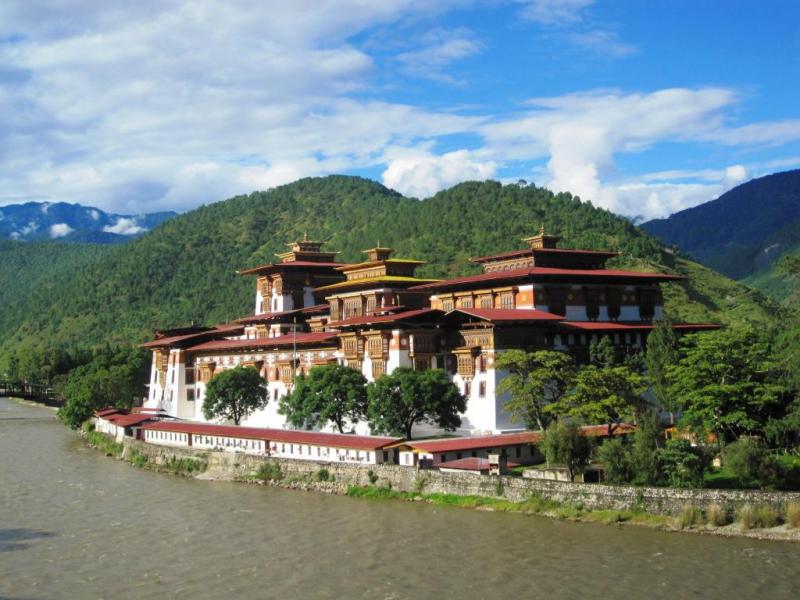
The magnificent Punakha Dzong, also known as Pungtang Dechen Phodrang, stands at the meeting point of the Pho Chhu and Mo Chhu rivers. Its spectacular architecture, riverside location, Buddhist heritage, and historical importance make it one of the major highlights of a Bhutan cultural tour.
Paro Taktsang, popularly known as Tiger's Nest Monastery, is Bhutan's most iconic cultural landmark. Perched dramatically on a cliff above the Paro Valley, the monastery is closely associated with Guru Rinpoche (Padmasambhava) and Bhutanese Buddhist tradition.
The hike to Tiger's Nest requires several hours of walking and involves uphill sections, stairs, and uneven mountain paths. Starting early is often preferred because of cooler temperatures and better opportunities for comfortable hiking. Weather and trail conditions can influence the experience.
Thimphu, Bhutan's capital, combines modern government institutions with traditional Bhutanese culture and architecture. Surrounded by Himalayan hills, the city provides an excellent introduction to the country's history, religion, arts, and everyday lifestyle.
Important attractions include Trashi Chho Dzong, National Memorial Chorten, Buddha Dordenma Statue, and Simtokha Dzong. Visitors can also explore local markets, handicraft centers, museums, and traditional Bhutanese architecture.
Paro Dzong, officially known as Rinpung Dzong, is an impressive example of traditional Bhutanese architecture. Its massive walls, wooden details, courtyards, Buddhist artwork, and elevated position overlooking the Paro Valley make it an important cultural attraction.
A visit provides insight into Bhutan's religious and administrative heritage while offering beautiful views of the surrounding valley.
The Bhutan Tour 4 Nights 5 Days 2026–2028 is a compact yet enriching Himalayan holiday combining ancient monasteries, dramatic mountain scenery, traditional villages, Buddhist heritage, and authentic Bhutanese culture. From crossing scenic Dochula Pass and exploring historic Punakha to hiking toward the legendary Tiger's Nest, each day introduces a different side of this remarkable Himalayan kingdom.
For travelers searching for a Bhutan tour package, Bhutan cultural tour, Bhutan family holiday, Bhutan sightseeing itinerary, or 4 nights 5 days Bhutan tour, this journey offers a balanced introduction to the country's landscapes, traditions, history, and spiritual heritage.
Your 4 days on Bhutan Tour start with a scenic flight from Kathmandu Airport to Paro International Airport. The distance between these two cities is around 500 km, and it takes approximately 70 minutes to complete the flight.
You'll see Mount Everest, Lhotse, Nuptse, and Kanchenjunga during the flight. You'll also see two beautiful mountains of Bhutan, Chomolhari and Jitchu Drake.
Upon landing at Paro Airport, our representative will pick you up at the terminal.
You'll get a private vehicle transfer from Paro to Thimphu. You'll get a three-star hotel for overnight accommodation.
Punakha sits 74 away from Thimphu, and the drive time is 3 hours. But first, after breakfast, you'll do sightseeing around Thimphu.
You'll visit some beautiful places in the city, like Memorial Chortens, Buddha Point, and the National Library of Bhutan. The Memorial Chortens is a unique chorten as it symbolizes the Buddha's brain instead of housing the dead bodies. Also, the National Library gives you the idea of preserved Bhutanese culture.
After lunch, you'll take a drive from Thimphu to Punakha. En route, you'll stop at Dochula Pass (3,100 meters) to visit 108 Memorial Chortens established by the Queen of Bhutan. From here, you'll see some incredible panorama of mountains, including the highest mountain of Bhutan, Mt. Gangkar Puensum and Mt. Masanggang at 7,194 meters (23,602 ft).
Overnight at a three-star hotel in Punakha.
Punakha visit is your 3rd day on a 4 night 5 days Bhutan Tour. On this day, you'll sightsee beautiful places of Punakha, including Punakha Dzong, Pho Chu and Mo Chu rivers, and the bamboo village at Wangdiphodrang. Moreover, the paddy farmlands at Punakha during June and July are worth a visit.
Moreover, you'll also visit Chhimi Lhakhang, a temple believed to grace couples with fertility. People who don't have kids due to infertility worship this temple and pay their visit.
After lunch at Punakha, you'll return to Paro via Dochula Pass. Here, on December 13, Bhutanese Army Dochula Druk Wangyel Tshechu. Instead of monks and locals, the Army especially celebrates this festival to honor their victory in the Himalayas.
During winter, the Dochula Pass and Memorial Chorten get covered in snow. You'll have a fantastic time returning from Punakha to Paro on this day.
Overnight at the three-star hotel in Paro.
The major attraction of the 4 days Bhutan Tour is a hike to Tiger's Nest. It's a Buddhist monastery on a sheer cliff, over 800 meters, on a mountain. Not just a Buddhist monastery, it holds great value to Bhutanese Buddhism. Guru Rimpoche (Padhmasamvava, the second Buddha) was the first to meditate in the cave near this monastery. Later, as he came on top of a tiger, the legend of the tiger made this place known better as Tiger's Nest.
This monastery is the cultural icon of Bhutan. To reach here, you'll hike for three hours from Paro. The hiking trail to Tiger's Nest is easy to moderate grade. If you find walking difficult, you can hire a horse as well. But it'll cost USD 20 per person.
This hike completes in five hours. After returning to Paro, you'll have lunch and rest at the hotel.
After mid-day, you'll visit the local market and Paro Dzong.Overnight accommodation at a three-star hotel in Paro.
5th day on your 4 nights 5 days Bhutan Tour marks the end of the magnificent Bhutan Tour. You'll get an airport transfer from the hotel based on your flight schedule.
You'll get flights from Paro to Bangkok, Singapore, Delhi, and Kathmandu.
If you wish to fly to Nepal and do some trekking, we'd be happy to be the guide on the country of Everest. Our exciting trips and treks await you.
Bhutan is a comparatively more expensive country than Nepal and India. However, while touring in Bhutan, there's one principle you'll experience, High-Value, Low Impact.
For every tourist, Bhutan offers the highest quality tour experience. Whether it's a tour guide or the meals and accommodation at the three-star hotel you'll stay, everything is of top quality.
Bhutan's high-class service is comparatively more expensive than other South Asian countries.
Accessing Bhutan for the tour is only possible after you make all the tour arrangements with tour operators like us. The primary reason is that the Bhutan government has banned independent travelers from preserving their ecological and cultural values.
We'll process your tourist visa once you purchase Bhutan Tour Package from us. We'll pay your Bhutan government tariffs and other costs like tour permits.
No. You'll not get altitude sickness while touring and hiking in Bhutan. The highest altitude you'll reach in Bhutan is 3,120 at Tiger's Nest Monastery. Another high-altitude place you'll visit is Dochula Pass, at 3,100 meters. These altitudes are safe and free from altitude sickness.
Adventure Nepal Eco Treks representative will be there at the terminal to welcome you to Bhutan. Moreover, you'll get accompanied by a tour guide throughout your four days tour in the country.
You'll get a private vehicle for ground transportation during your tour. Also, you'll get airport-to-hotel and hotel-to-airport pickup drop service as complimentary from us.
Our representative will be there for your assistance throughout.
Yes, all foreign nationals require a visa to enter Bhutan. Visas must be obtained in advance through a licensed Bhutanese tour operator or through a foreign travel agent.
The best time to visit Bhutan largely depends on your preferences and the activities you wish to undertake. Bhutan experiences distinct seasons, each offering unique experiences. Here's an overview:
Spring (March to May):
Spring is one of the most popular times to visit Bhutan, as the weather is generally mild and pleasant.
The landscape comes alive with blooming flowers, particularly rhododendrons, making it ideal for nature enthusiasts and photography.
This season is also suitable for trekking and hiking, with clear skies and moderate temperatures.
Summer (June to August):
Summer in Bhutan brings warmer temperatures and occasional rainfall, especially in the afternoons and evenings.
The lush greenery and vibrant landscapes make it a beautiful time for nature lovers.
Despite the occasional showers, summer is a good time for trekking and outdoor activities, as the trails are less crowded.
Autumn (September to November):
Autumn is another popular time to visit Bhutan, characterized by clear skies, pleasant temperatures, and colorful foliage.
It's an excellent time for trekking, wildlife viewing, and cultural festivals, such as the Thimphu Tshechu and Paro Tshechu.
The weather is generally stable, making it ideal for exploring Bhutan's cultural attractions and outdoor activities.
Winter (December to February):
Winter in Bhutan brings cold temperatures, especially in higher altitude areas, with occasional snowfall in the northern regions.While some trekking routes may be closed due to snow, lower altitude areas remain accessible for cultural tours and sightseeing.
Winter is also the time for birdwatching, as migratory birds flock to Bhutan during this season.
Ultimately, the best time to visit Bhutan depends on your interests, whether you prefer mild weather, vibrant landscapes, cultural festivals, or outdoor adventures. It's advisable to plan your trip according to your preferences and consult with a reputable tour operator for personalized recommendations based on your travel plans.
The official currency of Bhutan is the Bhutanese Ngultrum, abbreviated as BTN. However, Indian Rupee (INR) is also widely accepted and interchangeable with the Ngultrum in Bhutan. While Ngultrum is used for most transactions within Bhutan, Indian Rupees are commonly accepted in border areas and for larger transactions. It's advisable to carry a mix of both currencies when traveling in Bhutan to ensure convenience, especially in more remote areas where currency exchange facilities may be limited.
Packing for a trip to Bhutan requires consideration of the country's diverse climate, cultural norms, and the activities you plan to undertake. Here's a comprehensive packing list:
Clothing:
Lightweight, breathable clothing for warmer weather (especially during the summer months).
Layered clothing for cooler temperatures, particularly in the evenings and at higher altitudes.
Long-sleeved shirts and pants to protect against sunburn and insects.
Comfortable walking shoes or hiking boots for outdoor activities.
Waterproof jacket or poncho, as Bhutan's weather can be unpredictable.
Warm jacket or fleece for cooler temperatures.
Scarf or shawl for visits to temples and dzongs (as a modest covering).
Accessories:
Sunscreen with high SPF.
Sunglasses with UV protection.
Hat or cap to shield from the sun.
Daypack or backpack for day trips and hiking excursions.
Water bottle to stay hydrated (consider a reusable one to reduce plastic waste).
Yes, there is a dress code for visiting monasteries, temples, and dzongs (fortresses) in Bhutan. Modest attire is required out of respect for the religious and cultural significance of these sites. Both men and women should adhere to the following guidelines:
Covered Shoulders: Tops should cover the shoulders. Sleeveless shirts or tank tops are generally not permitted.
No Shorts or Skirts Above the Knee: Shorts, short skirts, and mini-skirts are not appropriate. Skirts and dresses should be knee-length or longer.
Long Pants or Skirts: Wear long pants or skirts that cover the knees.
No Tight or Revealing Clothing: Clothing should not be overly tight or revealing.
Remove Hats and Shoes: It's customary to remove hats and shoes before entering religious buildings.
Avoid Excessive Jewelry: While wearing jewelry is acceptable, it's best to avoid anything overly flashy or ostentatious.
Following these guidelines demonstrates respect for the cultural and religious traditions of Bhutan and ensures a smooth and respectful visit to these sacred sites. If you're unsure about what to wear, your tour operator or guide can provide guidance.
Bhutan, known for its stunning landscapes, rich culture, and unique heritage, offers a range of attractions for visitors to explore. Some of the popular tourist attractions in Bhutan include:
Tiger's Nest Monastery (Taktsang Palphug Monastery): This iconic monastery, perched precariously on the edge of a cliff in Paro Valley, is one of Bhutan's most famous and sacred sites.
Punakha Dzong: Located at the confluence of the Pho Chhu and Mo Chhu rivers, Punakha Dzong is one of Bhutan's most beautiful and historically significant fortresses.
Thimphu: Bhutan's capital city offers a mix of modernity and tradition. Visitors can explore attractions such as the Tashichho Dzong, National Memorial Chorten, Buddha Dordenma Statue, and the bustling weekend market.
Paro Valley: Surrounded by lush greenery and picturesque landscapes, Paro Valley is home to several attractions, including Rinpung Dzong, National Museum of Bhutan, and traditional Bhutanese farms.
Dochula Pass: Situated on the road from Thimphu to Punakha, Dochula Pass offers breathtaking views of the Himalayan mountain range, with 108 memorial chortens (stupas) adding to its beauty.
Gangtey Valley and Gangtey Monastery: Known for its scenic beauty and as the winter habitat of the endangered black-necked cranes, Gangtey Valley is home to the Gangtey Monastery, a prominent religious site.
Haa Valley: Tucked away in western Bhutan, Haa Valley is renowned for its pristine natural beauty, traditional architecture, and cultural heritage.
Bumthang Valley: Often referred to as the "spiritual heartland" of Bhutan, Bumthang Valley is dotted with ancient temples, monasteries, and sacred sites, including Jakar Dzong and Kurjey Lhakhang.
Trongsa Dzong: Strategically located on a hilltop overlooking the Mangde Chhu river, Trongsa Dzong is an impressive fortress that played a crucial role in Bhutan's history.
Jigme Dorji National Park: Bhutan's largest national park offers opportunities for wildlife viewing, trekking, and experiencing the country's pristine natural environment.
These are just a few of the many attractions that await visitors in Bhutan. Each destination offers a unique glimpse into the country's rich culture, history, and natural beauty.
The physical fitness required to visit Bhutan largely depends on the specific activities you plan to undertake during your trip. While some treks and hikes in Bhutan may require a certain level of physical fitness, many of the country's main tourist attractions are accessible to people of varying fitness levels.
For example, visiting popular sites such as the Tiger's Nest Monastery (Taktsang Palphug Monastery), Punakha Dzong, and exploring cities like Thimphu and Paro generally do not require high levels of physical fitness. However, it's essential to consider factors such as altitude, walking distances, and terrain when planning your itinerary.
If you have specific concerns about your fitness level or any physical limitations, it's advisable to discuss them with your tour operator or guide in advance. They can provide insights into the activities planned for your trip and suggest suitable alternatives if necessary. Additionally, pacing yourself and taking breaks as needed can help ensure an enjoyable and comfortable experience while exploring Bhutan.
In general, it is not recommended to drink tap water in Bhutan. While the water quality may be safe in some urban areas, it's better to err on the side of caution and stick to bottled water, especially for tourists. Bottled water is widely available in Bhutan, and most hotels, restaurants, and shops offer it for purchase. It's essential to stay hydrated, particularly when traveling, so be sure to carry an adequate supply of bottled water with you during your visit.
Credit and debit cards are accepted in some hotels, shops, and restaurants in major cities like Thimphu and Paro. However, the acceptance of cards can be limited, especially in more rural or remote areas. Therefore, it's advisable to carry cash, preferably in Bhutanese Ngultrum, for smaller purchases and in areas where card acceptance may be limited. Additionally, it's always a good idea to inform your bank of your travel plans to Bhutan to prevent any issues with card usage due to international transactions.
Tipping is not a common practice in Bhutan, especially in the context of everyday services like dining in restaurants or taking taxis. However, if you receive exceptional service from your guide, driver, or any other staff during your tour, it is appreciated to leave a tip as a token of appreciation. Tipping is entirely discretionary and should reflect your satisfaction with the service provided. If you choose to tip, it's recommended to do so in cash, preferably in Bhutanese Ngultrum.
You'll get full board meals throughout your 4 nights 5 days Bhutan Tour. It includes 5 breakfasts, 5 lunches, and four dinners. You'll get meals of your choice throughout the tour.
While accommodating, you'll get a twin-sharing room. It comes with an attached bathroom as well. However, you'll get a three-star hotel for accommodation.
You'll get personal rooms during the tour if you want. However, a prior requirement request is a must.
Before flying to Bhutan, you should get a valid Bhutan Travel Visa. To apply for the visa, there needs to be an online form submission or embassy involved. To apply for the tourist visa, you should purchase Bhutan Tour Package from travel agencies like us.
Individual applications for Bhutan Tourist Visas are almost impossible to get. We're an eligible Bhutanese tour operator based in Nepal and can apply for a tourist visa for you.
Once you purchase a 4 nights 5 days Bhutan Tour with us, we'll start processing your visa application on your behalf. Your Bhutan Visa/Permit then gets transferred to Bhutan Foreign Ministry.
You need to send us certain documents to start your Bhutan Travel Visa application. They are:
Full Name- Permanent address
- Copy of your passport, which must be valid for the next year
- Passport-sized photos
Note: You don't need to pay an additional fee for a visa application. Your purchase of the Bhutan Tour Package from us includes the visa and tour permit fees. Plus, your visa is valid for 15 days only, no matter how long or short your tour to Bhutan is. For extension, it costs USD 8.
The flight from Kathmandu to Paro International Airport costs USD 240, exclusive to the Bhutan Tour Package. Once we manage a Bhutan Travel Visa, you must pay for the flight fare.
However, your ground transportation to Bhutan will include the 4 night 5 days Bhutan Tour Package cost. You'll get private vehicles throughout the tour in Bhutan. It provides airport pickup drop, hotel transport, sightseeing transport, etc.
Tour guide during 4 nights 5 days Bhutan Tour
Throughout your Bhutan Tour, you'll be guided by a licensed tour guide of Bhutan origin. We employ Bhutanese guides for this tour because Bhutanese guides know their place better than foreign guides.
To make your 4-day Bhutan Tour unforgettable, we employ guides with several years of guiding experience. Also, they come with fantastic client reviews and recommendations.
Moreover, you'll get tour guides based on your language preference, predominantly English-speaking guides. However, with the extra language requirements of the tour guide, your trip cost may be subject to increase.
We encourage you to purchase international travel insurance for your four day Bhutan Tours. Your travel insurance covers your emergency rescue, hospitalization cost, theft, loss of personal stuff and more.
Once you book this tour from us, you must submit proof of travel insurance policy. Otherwise, you may need help joining the group.
Bhutan has a climate almost like Nepal. Both countries get the Indian monsoon during summer, from June to August. Like in Nepal, Bhutan Tour is best during spring, autumn, and Winter.
Whether it's a city sightseeing tour like Thimphu and Punakha or the hike to Tiger's Nest, the mild weather of spring and autumn facilitates the ideal touring conditions. The crystal clear viewing of landscapes, rain-free days, and mild temperatures from March to May and September to November are the best times for Bhutan Tour.