

Annapurna Base Camp Trek 2026–2027–2028 | Himalayan Adventure
The Annapurna Base Camp Trek is one of Nepal’s most rewarding high-altitude trekking adventures, taking you deep into the spectacular Annapurna Sanctuary at approximately 4,130 meters. Surrounded by towering Himalayan peaks, this natural mountain amphitheater offers breathtaking panoramic scenery, including Annapurna I (8,091m), Machhapuchhre (6,993m), Annapurna South (7,219m), and Hiunchuli (6,441m). For travelers planning an unforgettable Himalayan journey in 2026, 2027, or 2028, the ABC Trek combines dramatic mountain landscapes, authentic village life, rich culture, and accessible trekking routes.
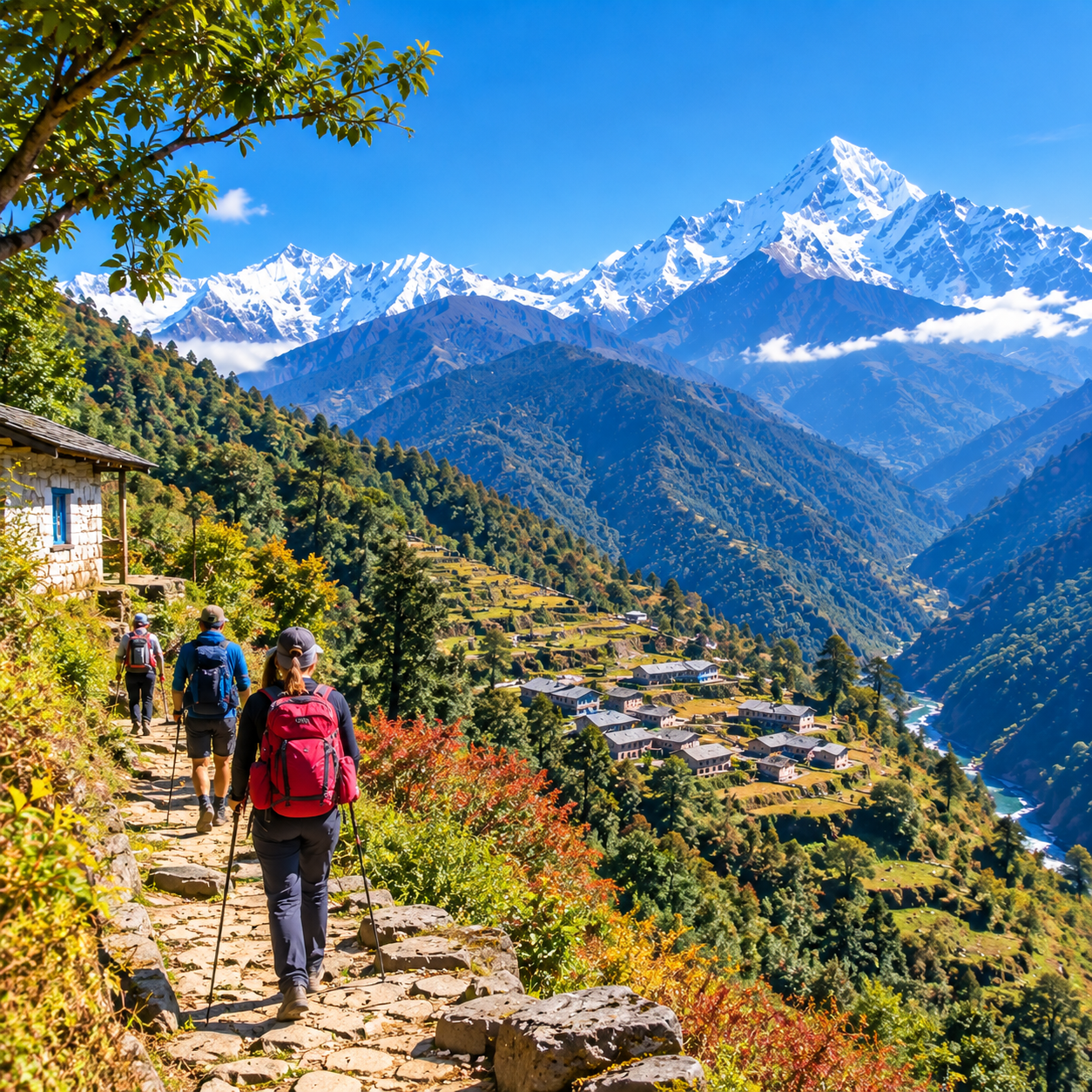
Reaching Annapurna Base Camp is only part of the adventure—the journey itself is filled with extraordinary scenery. The trail winds through vibrant rhododendron forests, alpine meadows, terraced farmland, lush valleys, and traditional mountain settlements. As the altitude increases, the landscape gradually changes from subtropical vegetation to rugged alpine terrain, creating an impressive contrast throughout the trek.
After completing the trek, a visit to the natural hot springs at Jhinu Danda provides an ideal opportunity to relax. Soaking in the warm mineral-rich water while surrounded by the Himalayan landscape is a memorable way to recover after several days of trekking and reflect on the journey.
The Annapurna Base Camp Trek 2026–2027–2028 is not only a mountain adventure but also a cultural journey through the traditional communities of Nepal. The route passes through villages inhabited by Gurung and Magar communities, allowing trekkers to observe traditional lifestyles, architecture, customs, hospitality, and local culture.
Unlike remote camping expeditions, ABC is a teahouse-based trek, meaning travelers do not normally need to carry camping equipment. Numerous teahouses and mountain lodges provide accommodation and meals along the main route, making the trek relatively accessible for both first-time and experienced trekkers.
The ABC Trek is generally considered a moderately challenging Himalayan trek. You do not need technical mountaineering skills, but a reasonable level of fitness is important. Typical trekking days can involve approximately 5–7 hours of walking, with numerous stone steps, uphill climbs, downhill sections, and changing elevations.
Altitude is another important consideration. Although Annapurna Base Camp is not among Nepal's highest trekking destinations, trekkers should remain aware of the possibility of altitude-related illness. Walking at a steady pace, staying hydrated, eating sufficiently, getting adequate rest, and following the guidance of an experienced trekking professional can help make the journey safer and more enjoyable.
The most popular trekking seasons for the Annapurna Base Camp Trek are spring (March–May) and autumn (September–November). During these periods, travelers can generally enjoy clearer mountain views, relatively stable weather, pleasant trekking conditions, and colorful landscapes.
Winter (December–February) can also be appealing for travelers who prefer quieter trails and colder Himalayan scenery. However, temperatures can drop significantly at higher elevations, and snowfall may affect trail conditions.
The monsoon season (June–August) is generally less favorable. Rain can make trails slippery, while landslides, road disruptions, clouds, and reduced mountain visibility can complicate travel. Nevertheless, conditions can vary, so travelers should check current weather and trail information before departure.
Trekkers entering the Annapurna region require the Annapurna Conservation Area Permit (ACAP). The commonly published fee is NPR 3,000 for foreign visitors, although travelers should confirm the latest fee and regulations before starting their trek.
Rules concerning the TIMS card and guide requirements can change, so trekkers should verify the current regulations with official Nepal authorities or a registered trekking agency before departure. Nepal introduced broader guide requirements in 2023, but implementation has varied across trekking areas. Because regulations may be updated, checking the latest requirements for the Annapurna region is an important part of trip preparation.
Some independent travelers choose to complete the Annapurna Base Camp Trek without a guide, particularly because the route is relatively well established and has frequent teahouses. However, independent trekking does not remove the need to comply with current government and local regulations.
For travelers planning their ABC Trek in 2026, 2027, or 2028, it is important to check the latest guide and permit rules before departure. Hiring a licensed local trekking guide can also provide practical advantages, including route assistance, accommodation coordination, communication with local communities, support during weather changes, and help in case of unexpected difficulties.
The Annapurna Base Camp Trek can be completed through several route variations, with overall duration generally ranging from approximately 5 to 15 days, depending on transportation, starting point, trekking pace, acclimatization strategy, and itinerary design.
A carefully planned 14-day Annapurna Base Camp itinerary provides a comfortable option for many first-time trekkers. A longer schedule allows travelers to maintain a manageable walking pace, enjoy the villages and landscapes along the trail, and include appropriate rest or acclimatization time where needed.
Rather than rushing toward the destination, a well-designed itinerary allows you to fully experience the forests, waterfalls, mountain villages, terraced hillsides, Himalayan viewpoints, and cultural attractions that make the Annapurna Base Camp Trek 2026–2027–2028 one of Nepal's most memorable trekking experiences.
The ABC Trek brings together many of the experiences travelers seek from a Himalayan adventure: spectacular snow-covered mountains, traditional villages, rhododendron forests, alpine landscapes, local hospitality, cultural discovery, and the unforgettable arrival at Annapurna Base Camp at approximately 4,130m.
Whether you are an experienced trekker or preparing for your first Himalayan adventure, the route offers a rewarding balance of natural beauty, cultural immersion, physical challenge, and comfortable teahouse accommodation.
For travelers planning a Nepal trekking holiday in 2026, 2027, or 2028, Annapurna Base Camp remains an excellent choice for experiencing the heart of the Annapurna Himalayas. With proper preparation, suitable travel insurance, appropriate equipment, current permit information, and a well-planned itinerary, the journey to the sanctuary can become an unforgettable Himalayan adventure.
Annapurna Base Camp Trek 2026–2027 – Package, Cost & Best Price
The Annapurna Base Camp Trek 2026–2027 is one of Nepal’s most sought-after Himalayan trekking experiences, bringing together spectacular mountain panoramas, authentic mountain villages, colorful rhododendron forests, terraced landscapes, and the magnificent Annapurna Sanctuary. Located at approximately 4,130 meters (13,549 feet), Annapurna Base Camp offers an unforgettable close-up Himalayan experience. A classic route passes through highlights such as Ghandruk, Chomrong, Bamboo, Deurali, Annapurna Base Camp, Bamboo, and Jhinu Danda, creating an exciting combination of nature, culture, and adventure. For travelers from the USA, Canada, Australia, Europe, and Asia, this trek provides an excellent balance of scenery, cultural discovery, trekking duration, and overall package value. A competitive trekking package should include a best-value ABC Trek price, experienced local guide, permits, accommodation, meals, transportation, porter support, and convenient online booking. Published prices can vary considerably according to itinerary length, group size, and included services, with market examples ranging from approximately $560 to $1,120+.
The Annapurna Base Camp Trek Package 2026–2027 is an ideal choice for travelers seeking a professionally arranged Himalayan adventure without committing to the longer duration or potentially higher cost of some Everest-region treks. The itinerary can be organized for different durations depending on the starting point, transportation arrangements, walking pace, and individual preferences. A traditional Kathmandu-to-Kathmandu program can include travel between Kathmandu and Pokhara before trekking toward ABC through scenic Gurung villages and mountain valleys. Travelers beginning directly from Pokhara or using road transportation closer to the trailhead may choose a shorter version. When comparing Annapurna Base Camp Trek packages, look beyond the advertised price and evaluate the complete itinerary, guide, porter, permits, accommodation, meals, transportation, and exclusions. Group size can also have a significant impact on the final per-person price.
The Annapurna Base Camp Trek Cost 2026–2027 varies according to trek duration, group size, travel season, accommodation level, transportation, guide and porter services, and overall package inclusions. Published market rates can differ substantially, with examples ranging from around $560 to more than $1,120, depending on the services provided. Some operators offer lower per-person prices for couples, small groups, or larger groups, making group size an important factor when searching for the best Annapurna Base Camp Trek price.
Rather than choosing a package simply because it has the lowest advertised rate, travelers should compare what they actually receive for the money. A genuine Best Price Annapurna Base Camp Trek should provide transparent information about permits, accommodation, meals, guide, porter, transportation, taxes, and exclusions. International travelers can request a personalized quotation based on their exact dates, number of participants, preferred trekking duration, and desired service level to obtain a more accurate package price.
Choosing an Annapurna Base Camp Trek with a Local Guide gives you valuable support from the beginning of the trail to the heart of the Annapurna Sanctuary. An experienced local guide assists with route navigation, daily walking plans, teahouse arrangements, local communication, cultural interpretation and general trekking support. Many organized Annapurna Base Camp Trek Packages include a professional English-speaking guide and porter together with accommodation, meals and trekking permits. For international visitors, having a local expert can be particularly helpful when weather, road conditions or local circumstances require adjustments to the planned itinerary.
When comparing Annapurna Base Camp Trek Packages, look beyond the advertised price and carefully check what is actually included. Confirm whether the package covers a licensed guide, guide insurance, accommodation, meals, transportation, permits and porter services.Best Price & Book Online” can effectively target travelers searching for reliable service, competitive pricing and convenient direct booking.
A well-planned Annapurna Base Camp Trek Itinerary usually combines comfortable transportation with a gradual progression through diverse Himalayan landscapes. A classic itinerary can begin with the journey from Kathmandu to Pokhara, followed by road transportation toward Ghandruk, where the trekking adventure begins. The route passes through important stops including Ghandruk at approximately 1,940 meters, Chomrong at 2,170 meters, Bamboo at 2,310 meters, Deurali at 3,230 meters and Annapurna Base Camp at around 4,130 meters.
After reaching ABC, trekkers descend through the sanctuary and continue toward Bamboo and Jhinu Danda before traveling back toward Pokhara. Along the way, travelers encounter traditional Gurung settlements, lush forests, waterfalls, river valleys and spectacular Himalayan scenery. Private Annapurna Base Camp Trek Itineraries can be adjusted according to fitness level, available vacation time, preferred walking pace and transportation choices. Since road and local travel conditions can change, always confirm the final itinerary, services and transportation arrangements with your trekking operator before departure.
The outstanding appeal of the Annapurna Base Camp Trek comes from the remarkable variety of landscapes and experiences found along one compact Himalayan journey. The trail takes travelers through traditional Gurung villages, terraced hillsides, colorful rhododendron forests, rushing rivers, waterfalls and impressive mountain valleys. As the route climbs higher, the landscape gradually transforms into the dramatic alpine environment of the Annapurna Sanctuary.
Reaching Annapurna Base Camp at approximately 4,130 meters provides an unforgettable close-up Himalayan experience surrounded by spectacular mountain scenery. After leaving the sanctuary, many itineraries also include time at Jhinu Danda, known for its natural hot springs. For travelers ready to reserve their trek, high-value search terms include Annapurna Base Camp Trek Package, ABC Trek Cost, ABC Trek Best Price, Annapurna Trek with Local Guide, Private ABC Trek and ABC Trek Online Booking. Combining these benefits with transparent pricing and professional service creates a strong commercial proposition for international trekkers.
Understanding the Best Time for Annapurna Base Camp Trek is essential when planning a comfortable and rewarding Himalayan adventure. The two traditionally preferred trekking periods are spring, from March to May, and autumn, from September to November. Spring brings warmer conditions at lower elevations and beautiful rhododendron blooms, creating colorful scenery along the trail. Autumn is widely favored for trekking because it commonly offers clear mountain views and favorable conditions for walking.
The summer monsoon season can bring rain and more challenging trail conditions, while winter may bring significantly colder temperatures, particularly at higher elevations. Travelers should therefore select their departure season according to their preferred weather, available vacation time and overall trekking budget. For strong 2026–2027.
Understanding the Annapurna Base Camp Trek permit requirements and included services is an important part of booking your Himalayan adventure. Organized trekking packages commonly arrange the Annapurna Conservation Area Permit (ACAP) and relevant TIMS services, together with guide and other trekking arrangements. Some package listings specifically include ACAP and TIMS-related fees as part of their advertised services.
For international travelers booking online, it is important to establish exactly which permits and administrative services are included in the quoted trek price. A professional trekking company should clearly explain the permit arrangements and handle the required documentation according to the applicable regulations. Before making a reservation, compare packages carefully and confirm whether permits, guide services, transportation and other essential trekking costs are already included. This helps you avoid unexpected expenses and makes it easier to identify the true value of an Annapurna Base Camp Trek Package.
A Private Annapurna Base Camp Trek 2026–2027 is an attractive choice for couples, families, friends and independent travelers who prefer a more flexible Himalayan experience. Private trips allow travelers to organize departure dates, walking pace, transportation, accommodation preferences and additional rest or acclimatization days according to their individual needs.
For travelers focused on value, small-group Annapurna Base Camp Trek Packages can also be an excellent option. Sharing certain trekking costs among more participants can reduce the per-person package price while still providing professional guide and porter support. When requesting a private or small-group quotation, provide the number of travelers, preferred departure dates, trek duration, accommodation preferences and transportation requirements. With these details, the trekking company can prepare a more accurate and competitive Annapurna Base Camp Trek Best Price rather than offering a generic package rate.
A high-value Annapurna Base Camp Trek Package should clearly explain every major service included in the advertised price. Depending on the trekking company and package selected, inclusions may cover airport transfers, Kathmandu or Pokhara accommodation, tourist transportation, teahouse accommodation during the trek, three meals per day, ACAP/TIMS arrangements, a professional English-speaking guide, porter service, guide and porter insurance, first-aid support, government taxes and company service charges.
However, inclusions can vary considerably between operators, so travelers should always compare the complete package details before booking. Check specifically whether international airfare, Nepal visa fees, travel insurance, trekking equipment, drinks, tips, hot showers, Wi-Fi, emergency evacuation and personal expenses are excluded. A transparent list of inclusions and exclusions allows international travelers to compare the real cost of different packages and choose an Annapurna Base Camp Trek Package offering genuine value rather than simply selecting the lowest advertised price.
Make your Himalayan adventure easier to arrange with Annapurna Base Camp Trek Online Booking 2026–2027. Whether you are traveling alone, as a couple, with family, with friends or as part of a small group, you can select a package based on your preferred dates, budget, trekking duration and level of service. Direct communication with a Nepal-based trekking operator can also make it easier to customize private departures and receive a quotation designed around your requirements.
Welcome to Nepal! Upon arrival at Tribhuvan International Airport, our representative will warmly greet you and transfer you to your hotel in Kathmandu. After check-in, relax or explore the lively Thamel area, a popular hub filled with restaurants, shops, culture, and Himalayan adventure. Kathmandu beautifully blends ancient heritage with modern energy, making it the perfect beginning to your 2027–2028 Annapurna Base Camp adventure.
Begin your second day with breakfast at your hotel in Kathmandu before setting off on a scenic drive to Pokhara, one of Nepal’s most beautiful lakeside cities. The journey covers approximately 200 km along the Prithvi Highway, passing through winding river valleys, lush green hills, terraced farmland, and traditional Nepalese villages.
As you leave the Kathmandu Valley, enjoy changing landscapes and views of the Trishuli River, a popular destination for white-water rafting. Along the way, you may stop at a local restaurant for lunch and refreshments while experiencing Nepal’s countryside and everyday village life. Road conditions and travel times can vary, so it is best to keep your schedule flexible.
Continue toward Pokhara, where the scenery opens up to beautiful hills and, when the weather is clear, views of the Annapurna Himalayan range. After arriving, check into your hotel and take some time to relax after the journey.
In the evening, stroll around Phewa Lake and Pokhara Lakeside, explore local shops, or enjoy dinner at a lakeside restaurant. Rest well before beginning your Annapurna Base Camp trekking adventure.
Enjoy a scenic journey from Kathmandu to Pokhara, Nepal’s beautiful lakeside city and gateway to the Annapurna region. The road winds through lush hills, river valleys, terraced fields, and charming villages before reaching peaceful Phewa Lake. With spectacular Himalayan scenery and the iconic Machhapuchhre rising in the distance, Pokhara offers the perfect setting to relax and prepare for your Annapurna Base Camp adventure 2027–2028.
After breakfast, enjoy a scenic drive from Pokhara to Nayapul, the gateway to your Annapurna trekking adventure. From Nayapul, begin walking through peaceful mountain villages, terraced farmland, lush forests, and traditional countryside landscapes. The trail gradually leads deeper into the spectacular Annapurna region, with welcoming local communities and beautiful Himalayan surroundings along the way. According to Nepal Tourism Board trekking information, Nayapul is an established access point for Annapurna trekking routes.
Continue along the trail toward Tikhedhunga at approximately 1,577 m, where comfortable teahouses provide a relaxing overnight stop. Enjoy the peaceful mountain atmosphere, warm local hospitality, and fresh Himalayan air as you prepare for the next stage of your Annapurna Base Camp Trek via Ghorepani and Poon Hill 2027–2028.
 Walking: approximately 5–7 hours · Overnight: Ghorepani
Climb gradually through beautiful oak and rhododendron forests, passing small settlements and forest clearings. The trail rises steadily toward Ghorepani, a popular mountain village surrounded by forested hills. On clear evenings, enjoy views of the Annapurna and Dhaulagiri ranges as you prepare for the early-morning Poon Hill excursion.
After breakfast, begin the scenic climb from Tikhedhunga to Ghorepani, following stone steps and winding trails through beautiful rhododendron and oak forests. As you gain elevation, the landscape opens to fresh mountain air, peaceful woodland, and glimpses of the magnificent Annapurna and Dhaulagiri ranges.
Continue toward Ghorepani, a famous Himalayan trekking village and gateway to Poon Hill. Nepal Tourism Board highlights Ghorepani for its spectacular panoramic mountain scenery and spring rhododendron forests.
After reaching approximately 2,860 m, relax at your comfortable teahouse and enjoy the peaceful mountain atmosphere. Get ready for an unforgettable early-morning Poon Hill sunrise, one of the major highlights of your Annapurna Base Camp Trek via Ghorepani and Poon Hill 2027–2028.
Start before dawn and hike to Poon Hill (3,210 m) for sunrise over the Annapurna and Dhaulagiri mountain ranges. After enjoying the panoramic views, return to the lodge for breakfast. Continue through rhododendron forests and rolling mountain trails toward Tadapani, a scenic stop surrounded by wooded hills and Himalayan landscapes.
Rise early and hike to Poon Hill (3,210 m) to witness a spectacular Himalayan sunrise. As the first golden rays touch the snow-covered peaks, the magnificent Annapurna and Dhaulagiri ranges come alive with breathtaking colors. Poon Hill is one of the renowned viewpoints of the Annapurna region, celebrated for its panoramic mountain scenery.
After enjoying the sunrise and taking memorable photographs, return to Ghorepani for breakfast and continue your trek toward Tadapani. The trail winds through peaceful rhododendron and oak forests, rolling hills, and traditional mountain landscapes. Arrive at Tadapani, a beautiful Himalayan settlement offering impressive views and a tranquil atmosphere—another unforgettable highlight of your Annapurna Base Camp Trek via Ghorepani and Poon Hill 2027–2028.
Walking: approximately 6–7 hours including viewpoint · Overnight: Tadapani
Descend through forested paths and small hillside settlements before climbing toward Chhomrong. This welcoming Gurung village is an important gateway to the Annapurna Sanctuary trail. Enjoy impressive views of Annapurna South and Machhapuchhre, also known as Fishtail Mountain, while learning about local mountain life.
Today’s scenic trail descends through lush rhododendron and oak forests, crossing mountain streams and suspension bridges while revealing beautiful views of the surrounding Annapurna landscape. Continue toward Chomrong, a lively Gurung village beautifully positioned beneath Annapurna South and Machhapuchhre (Fishtail). Enjoy the welcoming local atmosphere and spectacular Himalayan scenery as you move deeper into the Annapurna Sanctuary.
From Chomrong, the trail continues through dense rhododendron woodland toward Dovan (2,840 m). This section features several steep mountain passages and avalanche-prone areas, so your experienced local guide will carefully assess trail conditions. If weather and energy levels permit, continuing onward toward Deurali can shorten the following day and make the journey to Annapurna Base Camp more comfortable. This scenic section is an exciting part of your Annapurna Base Camp Trek via Ghorepani and Poon Hill 2027–2028.
Walking: approximately 5–7 hours · Overnight: Chhomrong
Descend stone steps toward the Chhomrong Khola and cross the river before climbing through Sinuwa. The trail continues beneath dense bamboo, oak, and rhododendron forest, with waterfalls and streams along the way. As you enter the narrower Modi Khola valley, the scenery becomes increasingly dramatic.
Today, the trail leads deeper into the spectacular Annapurna Sanctuary, gradually changing from lush forests and green vegetation to rugged alpine landscapes. Follow the scenic mountain path through rhododendron woodland, stone steps, and peaceful Himalayan surroundings as you ascend toward Dovan at 2,840 m.
As the altitude increases, the scenery becomes more dramatic, with rocky slopes, towering cliffs, and glimpses of the majestic Annapurna peaks. This beautiful section marks your transition into the higher Himalayas and brings you closer to Annapurna Base Camp. Enjoy the quiet mountain atmosphere and prepare for the exciting days ahead on your Annapurna Base Camp Trek via Ghorepani and Poon Hill 2027–2028.
Walking: approximately 5–6 hours · Overnight: Bamboo
Continue into the high mountain sanctuary, where the landscape becomes more open and alpine. Follow the Modi Khola valley beneath towering rock faces and snow-covered peaks until you reach Machhapuchhre Base Camp. Take time to rest, enjoy the mountain panorama, and prepare for the final ascent to Annapurna Base Camp. The overnight plan may be adjusted according to conditions and how everyone is feeling.
Today, the trail climbs deeper into the magnificent Annapurna Sanctuary, leading you from Dovan toward Machhapuchhre Base Camp (MBC) at approximately 3,700 m. As the landscape rises, lush forests gradually give way to rugged mountain terrain, dramatic cliffs, and breathtaking Himalayan panoramas.
Arriving at the foot of the legendary Machhapuchhre (Fishtail) Peak, you’ll be surrounded by towering rock faces and spectacular alpine scenery. The peaceful atmosphere, crisp mountain air, and ever-changing light across the snow-covered peaks create an unforgettable Himalayan experience. Rest at MBC and prepare for the ultimate highlight of your Annapurna Base Camp Trek via Ghorepani and Poon Hill 2027–2028—reaching Annapurna Base Camp the following day.
Walking: approximately 5–7 hours · Overnight: Machhapuchhre Base Camp
Today is the highlight of your trek. Walk through the spectacular Annapurna Sanctuary toward Annapurna Base Camp, surrounded by an impressive ring of Himalayan giants. Admire the dramatic scenery of Annapurna I, Annapurna South, Hiunchuli, Gangapurna, and Machhapuchhre. After reaching base camp, take photographs, relax, and enjoy the extraordinary mountain atmosphere.
Today is the grand highlight of your Annapurna Base Camp Trek as you leave Machhapuchhre Base Camp and follow the trail deeper into the spectacular Annapurna Sanctuary. With every step, the surrounding peaks rise dramatically, creating an unforgettable high-Himalayan landscape.
As you reach the vast natural amphitheater of Annapurna Base Camp at 4,130 m, the magnificent Annapurna South, Annapurna I, Hiunchuli, and Machhapuchhre (Fishtail) surround you. Take time to enjoy the breathtaking panorama, capture incredible photographs, and celebrate this unforgettable Himalayan achievement. Your arrival at ABC is a truly rewarding moment and a defining highlight of your Annapurna Base Camp Trek via Ghorepani and Poon Hill 2027–2028.
Walking: approximately 2–3 hours from MBC · Overnight: Annapurna Base Camp
If the weather allows, enjoy the early-morning mountain views before beginning your descent. Retrace the trail through Machhapuchhre Base Camp and Deurali, then continue through the valley toward Bamboo. Descending to a lower elevation helps you recover after the high-altitude section, although the long downhill walk can be demanding on your knees.
After enjoying the magnificent Himalayan scenery at Annapurna Base Camp, begin your rewarding descent toward Bamboo. The trail winds back through the spectacular Annapurna Sanctuary, passing rugged mountain landscapes, cascading streams, lush forests, and peaceful valleys.
As you gradually lose altitude, the scenery becomes greener and the air warmer. Continue through beautiful woodland and traditional mountain landscapes before reaching Bamboo at around 2,500 m. Relax at the teahouse and enjoy a peaceful evening, reflecting on the unforgettable highlights of your Annapurna Base Camp Trek via Ghorepani and Poon Hill 2027–2028.
Walking: approximately 6–7 hours · Overnight: Bamboo
Continue through the forest toward Sinuwa and Chhomrong, negotiating the region’s characteristic stone staircases and hillside paths. Descend to Jhinu Danda, a popular stopping point known for its natural hot springs beside the river. If time and trail conditions permit, visit the springs and enjoy a relaxing break after several days on the mountain trails.
Continue your scenic descent from Bamboo to Jhinu Danda, following a beautiful trail through lush forests, peaceful mountain villages, and green hillsides. As you gradually lose altitude, the landscape becomes warmer and more vibrant, offering a refreshing contrast to the high Himalayan scenery of Annapurna Base Camp.
Arrive at Jhinu Danda, a popular stop on the Annapurna Base Camp route and home to natural hot springs. Take a relaxing walk to the springs and soak in the warm mineral-rich water, allowing your tired muscles to recover after days of trekking. Enjoy the peaceful surroundings and local hospitality as you reflect on the unforgettable experiences of your Annapurna Base Camp Trek via Ghorepani and Poon Hill 2027–2028.
Walking: approximately 5–7 hours · Overnight: Jhinu Danda
Walk to the agreed roadhead, such as Samrung or Siwai, depending on the route and road access. Meet your vehicle and drive back to Pokhara. After checking into your hotel, enjoy free time around Phewa Lake, browse the Lakeside shops, or celebrate completing the Annapurna Base Camp trek.
After breakfast, begin the final trekking section from Jhinu Danda to Nayapul, following a scenic trail through lush hills, traditional villages, terraced fields, and peaceful countryside. As the trek gradually comes to an end, enjoy one last opportunity to appreciate the natural beauty and welcoming culture of the Annapurna region.
From Nayapul, meet your private vehicle and enjoy a comfortable drive to Pokhara, the beautiful lakeside gateway to the Annapurna Himalayas. After checking into your hotel, spend the evening relaxing beside Phewa Lake, exploring Lakeside, shopping for souvenirs, or simply enjoying the peaceful atmosphere after completing your Annapurna Base Camp Trek via Ghorepani and Poon Hill 2027–2028.
Return to Kathmandu by tourist bus or private vehicle, following the scenic highway through Nepal’s river valleys and countryside. Once in the capital, transfer to your hotel or continue to the airport according to your onward travel arrangements. Your 14-day Annapurna Base Camp adventure concludes with unforgettable memories of the Himalayas.
After breakfast, begin your return journey from Pokhara to Kathmandu, choosing a scenic domestic flight or comfortable private drive according to your itinerary. A short flight offers beautiful aerial views of Nepal’s hills and Himalayan landscapes, while the road journey provides a closer look at rivers, valleys, terraced fields, and countryside villages.
Upon reaching Kathmandu, check into your hotel and enjoy your final evening in Nepal. Take time to explore Thamel, shop for traditional souvenirs, or relax over a farewell Nepali dinner while remembering the incredible mountains, villages, and unforgettable moments of your Annapurna Base Camp Trek via Ghorepani and Poon Hill 2027–2028.
Driving: approximately 5–7 hours (flight 30 Minutes)
Your unforgettable Annapurna Base Camp Trek via Ghorepani and Poon Hill 2027–2028 comes to an end today. After breakfast, our representative will transfer you to Tribhuvan International Airport for your onward flight. Take home lasting memories of Himalayan peaks, beautiful villages, warm Nepalese hospitality, and an extraordinary adventure in the Annapurna region. Until your next journey in Nepal—Namaste and safe travels!
The Annapurna Base Camp (ABC) Trek is one of Nepal's most popular trekking adventures. It takes trekkers into the heart of the Annapurna Sanctuary, surrounded by towering Himalayan peaks. The trek combines spectacular mountain scenery, traditional villages, forests, rivers, and rich local culture. The standard itinerary usually takes 12–14 days, including travel to and from Pokhara.
The trek is considered moderate in difficulty. No technical climbing skills are required, but trekkers should be prepared for daily walks of 5–8 hours on uneven mountain trails. Good physical fitness and some prior hiking experience are helpful. Most healthy individuals can successfully complete the trek with proper preparation.
The highest point is Annapurna Base Camp at 4,130 meters (13,550 feet). While this altitude is lower than many Everest-region treks, altitude sickness can still occur, so gradual ascent and proper hydration are important.
The best seasons are spring (March to May) and autumn (September to November). Spring offers blooming rhododendron forests and mild temperatures, while autumn provides crystal-clear mountain views and stable weather. Winter is also possible for experienced trekkers, though temperatures can be very cold at higher elevations.
Yes. Current trekking regulations in Nepal require most foreign trekkers to be accompanied by a licensed trekking guide in the Annapurna region. A guide enhances safety, navigation, cultural understanding, and overall trekking experience.
Trekkers generally need:
Annapurna Conservation Area Permit (ACAP)
Trekker Information Management System (TIMS) registration or applicable trekking documentation according to current regulations
Your trekking company usually arranges these permits before departure.
Most 14-day itineraries begin and end in Pokhara. Common trailheads include places such as Nayapul, Jhinu Danda, or nearby road-access points depending on the itinerary and road conditions.
Accommodation is provided in local tea houses and mountain lodges. Rooms are generally simple but comfortable, usually with twin beds, blankets, and shared dining areas. Some villages offer private rooms and limited hot shower facilities for an additional fee.
Tea houses serve a variety of meals including rice, noodles, soups, pasta, potatoes, eggs, pancakes, porridge, and the traditional Nepali meal known as Dal Bhat. Vegetarian options are widely available throughout the route.
Although the trek's maximum altitude is 4,130 meters, some trekkers may experience mild symptoms of altitude sickness. Proper acclimatization, slow walking, adequate hydration, and avoiding alcohol at higher elevations can significantly reduce the risk.
Most trekking days involve 5–7 hours of walking, though some days may be shorter or longer depending on the itinerary. The daily distance is generally between 8 and 15 kilometers, with frequent breaks for meals, photographs, and rest.
Essential items include:
Layered clothing is highly recommended due to changing temperatures.
Most tea houses offer battery charging and Wi-Fi services for an additional fee. Internet speed may vary depending on weather and location. Mobile network coverage is available in many sections of the route but becomes less reliable at higher elevations.
Yes. The ABC Trek is often recommended as one of the best Himalayan treks for beginners. With reasonable fitness, proper preparation, and the support of an experienced guide, first-time trekkers can successfully complete the journey and enjoy the incredible scenery.
The trek offers an exceptional combination of dramatic mountain views, cultural immersion, diverse landscapes, accessible trekking infrastructure, and a relatively moderate altitude. Few treks in the world allow travelers to stand among giant Himalayan peaks such as Annapurna I, Machhapuchhre, and Hiunchuli while experiencing authentic village life and comfortable tea-house trekking. This unique combination makes the Annapurna Base Camp Trek one of Nepal's most rewarding adventures.
Yes, hot showers are available in many tea houses along the route, especially in lower villages such as Chhomrong and Sinuwa. However, as you gain altitude, facilities become more basic, and hot showers may cost an additional fee. In colder areas near base camp, availability can depend on weather conditions and lodge resources.
Yes, drinking water is available throughout the route. Trekkers can purchase boiled water at tea houses or refill bottles from designated water stations. It is recommended to carry water purification tablets, a filter bottle, or a UV purifier to reduce costs and minimize plastic waste. Staying hydrated is especially important at higher elevations.
Many families successfully complete the Annapurna Base Camp Trek with children and senior trekkers. The key is choosing a comfortable itinerary, maintaining a steady pace, and allowing enough time for rest and acclimatization. Families often hire experienced guides and porters to make the journey more enjoyable and less physically demanding.
The Annapurna region is rich in biodiversity. Trekkers may encounter colorful rhododendron forests, bamboo groves, oak forests, and a variety of bird species. Wildlife occasionally spotted includes the Himalayan Tahr, Musk Deer, and Danphe. Spring is particularly beautiful when the rhododendrons are in full bloom.
The Annapurna Base Camp Trek offers a more diverse mix of landscapes, including forests, waterfalls, villages, and high mountains within a relatively short period. It reaches a lower maximum altitude than the trek to Everest Base Camp, making it more accessible for many trekkers. The Annapurna route is also known for its close-up mountain views, rich cultural experiences, and easier access from Pokhara, while the Everest region is famous for views of Mount Everest and the unique culture of the Khumbu region. Both are world-class trekking experiences, but Annapurna is often considered the more diverse and beginner-friendly option.
During the Annapurna base camp trek, you have a pretty wide selection of the food items on the tea houses menus which are originated and prepared by the local community, the names of the most common meals name given below.
Common Breakfast options Tibetan Breads (a fried bread in oil, it’s also named by Gurung bread in Annapurna area), Chapati with Cheese (dry bread- a local wheat bread), Oatmeal, French toast with jam, honey and peanut butter, Corn Flakes, Hashed brown, fried, Scrambles and boiled eggs, pancakes, porridge with milk, Muesli, Vegetable items and any kind of hot drinks are available except espresso, Americano.
Common Lunch options: different verity of Thukpa (noodle soup), Dahl and Bhat (Nepalese local meal), Momo’s (dumplings), Tibetan / chapatti bread, Marconi, Spaghetti, Sherpa Stew, a verity of soups, steaks, potatoes items, Sandwiches, Pizza, rice with curry, spring rolls, burgers and Pizza, yak steak and desserts items.
Common Dinner options: Momo’s (dumplings) different verity of Thukpa (noodle soup), Dahl and Bhat (Nepalese local meal), Tibetan / chapatti bread, Marconi, Spaghetti, Sherpa Stew, a verity of soups, steaks, potatoes items, Sandwiches, Pizza, rice with curry, spring rolls, Raman soups, burgers and Pizza, yak steak, desserts items, hot and cold drinks are available on the menus on tea house, the menu’s selected meals are fresh and healthy with hygienic specialists by the mountain for the mountain trekkers.On the tea houses, the menu has plenty of non-veg items are mentioned but officially any of the meats are not our list of recommendations because the meat in the mountain such as high areas is not sanitary and healthy. However, we would like to persuade you to avoid taking meat, Alcoholic drinks, and smoking.
Hot Drink options: Varieties of hot drinks like black, milk coffees,


.jpeg)