
23rd Mar, 2024
Annapurna circuit Trek in March Weather, Accommodation, Temperature & Difficulties
Discover the Annapurna Circuit Trek in March with stunning spring landscapes, clear skies, and blooming rhododendrons. Learn about weather conditions, accommodation options, temperature ranges, and challenges to prepare for this unforgettable Himalayan adventure.
Table of Contents
The Annapurna Circuit in March: A Symphony of Renewal Amid the Heights
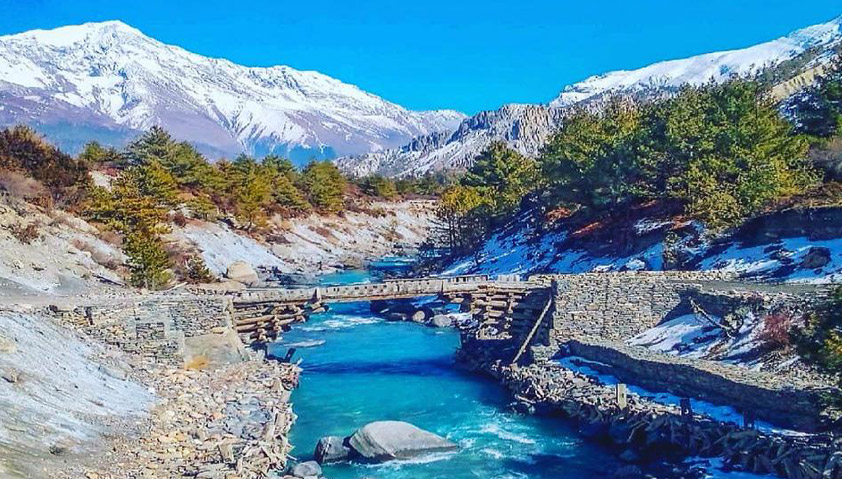
March, a month when winter loosens its grip and spring begins to whisper across the mountains, marks an enchanting time to embark on the Annapurna Circuit Trek. This iconic journey, looping through the heart of the Himalayas, offers trekkers a glimpse of awakening landscapes, crisp air, and snow-draped peaks, all while weaving through vibrant villages and ancient trails. With every step, the transition from icy heights to blooming valleys is a testament to nature's artistry.
Weather: A Season of Balance
March heralds the start of spring in Nepal, making it an ideal time for the Annapurna Circuit. As the snowline gradually recedes, the lower regions become carpeted in vibrant rhododendron blooms, while the higher elevations retain their frosty allure. Days are typically clear, offering unobstructed views of iconic peaks like Annapurna I (8,091m), Dhaulagiri (8,167m), and Machhapuchhre (6,993m).
At lower altitudes, temperatures during the day hover between 10°C to 20°C (50°F to 68°F), making trekking comfortable. Nights can be cooler, dipping to 5°C (41°F). Higher up, such as at Thorong La Pass (5,416m), daytime temperatures range from -2°C to 5°C (28°F to 41°F), with nighttime temperatures plummeting to -15°C (5°F) or lower. Layered clothing becomes essential to adapt to the shifting conditions.
Accommodation: A Warm Himalayan Welcome
The Annapurna Circuit is well-supported by an extensive network of teahouses, providing trekkers with rustic yet welcoming accommodations. In March, these lodges are less crowded compared to peak seasons like October, allowing for a more serene experience.
Rooms are typically simple, with twin beds and thick blankets to ward off the chill. At lower altitudes, teahouses are cozy, often adorned with cheerful decorations and offering a communal fireplace where trekkers can gather to share stories over a warm cup of ginger tea. As you ascend, the accommodations become more basic but no less hospitable. Facilities may include shared bathrooms, limited hot water, and electricity often powered by solar panels. Despite the simplicity, the hearty Dal Bhat meals and the genuine smiles of the hosts make every stay memorable.
Temperatures: A Journey Through Climate Zones
One of the most remarkable aspects of the Annapurna Circuit is its climatic diversity, transitioning from subtropical warmth to alpine chill and back.
Lowlands (800m - 2,000m): Here, the trek begins in lush valleys where daytime temperatures are pleasant, ranging between 15°C to 20°C (59°F to 68°F), and nights are cool, around 5°C to 10°C (41°F to 50°F).
Mid-Altitude (2,000m - 4,000m): As you climb past villages like Chame (2,710m) and Manang (3,540m), temperatures drop slightly, with daytime highs of 10°C to 15°C (50°F to 59°F) and nighttime lows approaching 0°C (32°F).
High Altitude (4,000m - 5,416m): Near Thorong La Pass, the cold becomes more pronounced. Daytime temperatures are chilly, averaging -2°C to 5°C (28°F to 41°F), while nights are decidedly frigid, often sinking below -10°C (14°F).
Layering is crucial to adapt to these shifts, and a windproof jacket becomes indispensable against the biting winds at higher elevations.
Difficulties: Challenges Amid Beauty
While the Annapurna Circuit is accessible to trekkers of varying experience levels, March presents its own set of challenges that demand preparation and resilience.
Altitude Sickness: The trek's highest point, Thorong La Pass at 5,416m, is a formidable test. Proper acclimatization is essential to avoid Acute Mountain Sickness (AMS). Spending an extra day in Manang, with its wealth of acclimatization hikes, can be beneficial.
Variable Trail Conditions: While lower sections of the trail are clear, higher passes may still harbor patches of snow and ice, particularly after late-winter storms. Sturdy boots and trekking poles are invaluable for navigating these areas.
Weather Unpredictability: Though March is known for its stability, occasional snowfalls at high altitudes and rain showers in the lower regions can occur. A reliable weather forecast and waterproof gear are must-haves.
Physical Endurance: Covering distances of 15-20 kilometers daily, often on steep and rugged terrain, requires good physical fitness. Preparation through cardio and strength training will make the journey more enjoyable.
Altitude Highlights: Peaks and Plateaus
Besisahar (760m): The gateway to the Annapurna Circuit, where subtropical greenery and terraced fields begin the narrative.
Manang (3,540m): A jewel in the circuit, this Himalayan hamlet offers stunning views and opportunities for acclimatisation.
Thorong La Pass (5,416m): The trek’s pinnacle, where breathtaking vistas of snow-capped peaks reward the climb.
Muktinath (3,760m): A sacred confluence of Buddhist and Hindu traditions, nestled in a serene alpine landscape.
In March, the Annapurna Circuit becomes a pilgrimage of contrasts — between frozen heights and blossoming valleys, tranquil villages and rugged trails, solitude and camaraderie. Each step on this legendary route is imbued with the magic of renewal, a reminder that spring in the Himalayas is not just a season but a celebration of life’s enduring spirit.
1# What is the weather like on the Annapurna Circuit in March?
March marks the beginning of spring, offering clear skies and blooming landscapes. Lower regions are mild and pleasant, while higher altitudes remain colder with occasional snowfall.
2# What is the temperature range during the trek in March?
Temperatures vary by altitude:
Lowlands (800m - 2,000m): 15°C to 20°C (59°F to 68°F) during the day and 5°C to 10°C (41°F to 50°F) at night.
Mid-altitudes (2,000m - 4,000m): 10°C to 15°C (50°F to 59°F) during the day and around 0°C (32°F) at night.
High altitudes (4,000m+): -2°C to 5°C (28°F to 41°F) during the day and as low as -15°C (5°F) at night.
3# Is March a good time to trek the Annapurna Circuit?
Yes, March is ideal for trekking. The trails are less crowded than in peak months, weather conditions are stable, and the spring blossoms create a stunning backdrop.
4# What kind of accommodation is available during the trek in March?
Teahouses along the route provide basic accommodations with twin beds, shared bathrooms, and communal dining areas. Lower altitudes may have better facilities, while higher areas are more rustic but hospitable.
5# Do I need to book accommodations in advance for March?
Typically, March is less crowded than October or November, so advance booking is usually unnecessary. However, carrying a flexible itinerary and confirming availability a day ahead can be helpful.
6# What are the main challenges of trekking the Annapurna Circuit in March?
Key challenges include:
Altitude sickness at higher elevations.
Snow or ice patches near Thorong La Pass (5,416m).
Variable trail conditions, particularly after late-winter storms.
7# How can I prepare for altitude sickness on the Annapurna Circuit?
To prevent altitude sickness:
Acclimatize by spending extra days in places like Manang (3,540m).
Hydrate well and ascend gradually.
Consider carrying medication like Diamox (after consulting a doctor).
8# What gear is essential for the trek in March?
Important gear includes:
Layered clothing for varying temperatures.
A windproof and waterproof jacket.
Sturdy trekking boots with good grip.
Trekking poles for stability on icy trails.
Sunglasses and sunscreen for UV protection.
9# Are the trails clear of snow in March?
Lower and mid-altitudes are usually snow-free in March. However, higher regions, especially near Thorong La Pass, may still have snow or icy patches. A guide or updated trail reports can help ensure safety.
10# Do I need a guide for the Annapurna Circuit in March?
While the trail is well-marked, hiring a guide is recommended for:
Navigating snowy or challenging sections.
Gaining insights into local culture and landscapes.
Providing support in case of altitude-related issues.
These FAQs cover essential aspects of the trek, ensuring you're well-prepared for the beauty and challenges of the Annapurna Circuit in March.
Recent From Blog


8th Sep, 2026

16th Aug, 2026

10th Aug, 2026

8th Aug, 2026

1st Aug, 2026

31st Jul, 2026

29th Jul, 2026
25th Jul, 2026

29th Jun, 2026
4th Jan, 2026


5th Jun, 2025

19th May, 2025

9th May, 2025

18th Apr, 2025

22nd Oct, 2024
21st Oct, 2024
19th Oct, 2024

18th Oct, 2024

11th Oct, 2024
11th Oct, 2024
8th Oct, 2024
