
16th Jun, 2024
Annapurna Circuit Trek in Nepal in April and May
Embark on the Annapurna Circuit Trek in Nepal during April and May 2025, where spring breathes life into the Himalayas. Journey through lush valleys, ancient villages, and sacred temples, crossing the majestic Thorong La Pass at 5,416 meters. With blooming rhododendrons and panoramic views of Annapurna and Dhaulagiri, this trek offers a mesmerizing blend of natural beauty, spiritual connection, and cultural discovery. Perfect for adventurers seeking to experience Nepal's diverse landscapes in the heart of spring.
Table of Contents
Annapurna Circuit Trek: A Symphony of Peaks and Valleys in April and May
The Annapurna Circuit, one of Nepal’s most iconic treks, is a journey that unfolds like an epic tale, each step revealing a new chapter of the Himalayas’ untamed beauty. In April and May, this legendary route comes alive with the vibrancy of spring, when the mountains shed their winter cloaks, and the valleys awaken under a blanket of wildflowers. It is a season of rebirth, where the air is crisp and clear, and the snow-capped peaks stand tall against an endless blue sky, beckoning trekkers into their majestic realm.
The journey begins in Besisahar (760 meters), where the trail winds its way through lush subtropical forests and terraced fields, dotted with villages that cling to the hillsides. Here, the warm, low-altitude air is fragrant with the scent of rhododendrons, their blossoms painting the landscape in shades of crimson, pink, and white. As you walk, the hum of life surrounds you—villagers tending to their fields, children laughing by the river, and the distant toll of a temple bell calling you into the heart of the Himalayas.
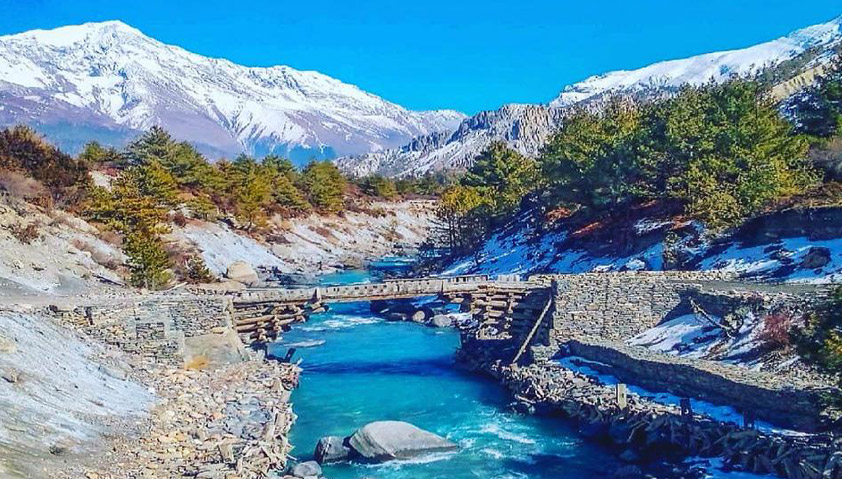
As you ascend, the landscape begins to change, the lush greenery giving way to the drier, rocky terrain of the Marsyangdi River valley. By the time you reach Chame (2,670 meters), the air is cooler, and the towering peaks of Annapurna II and Lamjung Himal rise before you like ancient sentinels. The villages here, built of stone and timber, seem to have grown out of the mountains themselves, their prayer flags fluttering in the wind, sending silent blessings to the heavens above.
In April and May, the Annapurna Circuit is a symphony of contrasts. As you climb higher, the valley narrows, and the world seems to grow quieter, save for the murmur of the river and the occasional call of a bird. The path takes you through forests of pine and juniper, where the scent of the earth is rich and grounding. Crossing suspension bridges that sway over roaring rivers, you feel the pulse of the mountains in every step, as if they are alive, watching over your journey.
At Manang (3,540 meters), the heart of the circuit, the altitude begins to make itself known. The village, nestled in a valley surrounded by towering peaks, is a place of refuge and preparation. Here, trekkers spend a day acclimatizing, wandering the narrow streets lined with prayer wheels and ancient stupas, or hiking to Gangapurna Lake for breathtaking views of the surrounding mountains. In spring, Manang is a haven of color, with the fields around the village blooming in a riot of wildflowers, while the snow still lingers on the higher slopes, creating a stark yet beautiful contrast.
As you leave Manang behind, the real test of endurance begins. The air grows thinner, and each step feels heavier as you climb toward the high-altitude pass of Thorong La (5,416 meters). The path winds through barren landscapes, where only the hardiest of plants cling to the rocky soil, and the wind howls like a spirit guiding you through this otherworldly realm. The ascent is grueling, but as you near the summit, the world opens up before you in a way that words cannot describe. At the top of Thorong La, you are greeted by a panorama that takes your breath away—snow-capped peaks stretching into the horizon, their silent grandeur humbling you in the vastness of the world.
The descent from Thorong La leads you into the mystical region of Muktinath (3,760 meters), a sacred site revered by both Hindus and Buddhists. The air here is charged with spirituality, and as you wander among the shrines and temples, you feel a deep sense of connection to the land and its ancient traditions. In April and May, the temples are bathed in sunlight, and the air is filled with the scent of juniper smoke, used in rituals that have been performed here for centuries.
As you continue your journey, the trail takes you through the dramatic Kali Gandaki Gorge, the deepest in the world, where the river has carved a path through the towering cliffs. In Jomsom (2,720 meters), the wind howls relentlessly, but the views of Dhaulagiri and Nilgiri are worth every gust. Here, the arid landscape of the Mustang region begins to reveal itself, a stark contrast to the lush valleys you left behind.
The final stages of the trek lead you through the apple orchards of Marpha (2,670 meters), known for its sweet cider, and down into the warmer, more fertile lands of Tatopani (1,200 meters), where hot springs offer a welcome respite for weary legs. The trail continues to Ghorepani (2,860 meters), where a pre-dawn hike to Poon Hill (3,210 meters) rewards you with one of the most spectacular sunrises over the Annapurna and Dhaulagiri ranges. In the early morning light, the mountains glow pink and gold, their snowy peaks standing tall against the sky, reminding you of the journey you’ve undertaken through these sacred lands.
In April and May, the Annapurna Circuit is a trek of awakening—of the land, of the spirit, and of the self. It is a journey through some of the most diverse landscapes on Earth, from subtropical forests to high alpine deserts, each step offering a deeper connection to the natural world and the ancient cultures that call these mountains home. As you walk, you are not just following a trail, but a path carved by centuries of pilgrims, traders, and adventurers, leaving behind a legacy that whispers through the wind and the stone.
1. What makes April and May ideal for trekking the Annapurna Circuit?
April and May are perfect for the Annapurna Circuit due to the mild weather and clear skies. Spring brings blooming rhododendrons and vibrant flora, while temperatures remain moderate, offering stunning views of the snow-capped peaks and a comfortable trekking experience.
2. What is the altitude profile of the Annapurna Circuit Trek?
The trek starts at Besisahar (760 meters) and ascends to the highest point at Thorong La Pass (5,416 meters). The journey includes key stops at Chame (2,670 meters), Manang (3,540 meters), Muktinath (3,760 meters), and Jomsom (2,720 meters) before descending to Tatopani (1,200 meters) and Ghorepani (2,860 meters).
3. How challenging is the Annapurna Circuit Trek?
The trek is moderately challenging, with steep ascents and high-altitude conditions, especially at Thorong La Pass. It requires good physical fitness and acclimatization, but the rewards are extraordinary views and a diverse trekking experience.
4. What permits are required for the Annapurna Circuit Trek?
You will need an Annapurna Conservation Area Permit (ACAP) and a Trekkers’ Information Management System (TIMS) card. These permits are mandatory for trekking in the Annapurna region.
5. How long does the Annapurna Circuit Trek take?
The trek typically spans 10 to 12 days, depending on your pace, acclimatization needs, and additional side trips. The duration allows for a thorough exploration of the circuit and a comfortable acclimatization process.
6. What kind of accommodation can I expect on the trek?
Accommodation ranges from basic teahouses to more comfortable lodges. In higher altitudes, the options may be more rudimentary, but they offer a warm and cozy respite from the cold, with hearty meals to sustain you.
7. What should I pack for the trek in April and May?
Pack layered clothing to accommodate varying temperatures, a good sleeping bag rated for cold weather, trekking poles, sun protection, and a first-aid kit. April and May bring mild days and chilly nights, so prepare for both.
8. How can I prepare for the high altitude of Thorong La Pass?
Acclimatization is crucial. Spend extra days in Manang to adjust to the altitude, stay hydrated, and ascend gradually. Following your guide’s recommendations and listening to your body will help prevent altitude sickness.
9. What cultural experiences can I expect along the Annapurna Circuit?
The trek offers rich cultural encounters with diverse ethnic groups, including Gurung, Magar, and Tibetan influences. Visit ancient monasteries, vibrant villages, and traditional festivals, experiencing a unique blend of Hindu and Buddhist traditions.
10. Is there internet and phone connectivity on the trek?
Connectivity varies along the trail. You may find internet and phone services in larger towns like Manang, Muktinath, and Jomsom. In more remote areas, connectivity may be limited, providing an opportunity to disconnect and immerse yourself in the journey.
Annapurna Circuit Trek with Adventure Nepal Eco Treks Why?
Expertise and Local Knowledge: Their guides are seasoned experts who bring deep knowledge of the Annapurna region. Their understanding of local culture, history, and geography enriches your trek, providing a more immersive and informative experience.
Eco-Friendly Practices: Adventure Nepal Eco Treks is committed to sustainable trekking practices. They prioritize minimizing environmental impact, supporting local communities, and preserving the natural beauty of the Annapurna region for future generations.
Customizable Itineraries: They offer flexible trekking packages that can be tailored to your preferences, fitness level, and schedule. Whether you want a more leisurely pace or wish to explore specific highlights of the circuit, they can adjust the itinerary to meet your needs.
Focus on Safety and Comfort: Safety is a top priority. Adventure Nepal Eco Treks ensures thorough acclimatization, provides well-maintained equipment, and adheres to safety protocols to ensure a secure and comfortable trekking experience.
Cultural Immersion: They facilitate authentic interactions with local communities, including visits to traditional villages, monasteries, and cultural sites. This fosters a deeper understanding of the rich traditions and daily life in the Annapurna region.
Support and Care: From pre-trek advice to on-the-ground support, Adventure Nepal Eco Treks provides comprehensive care. Their staff is dedicated to addressing any concerns, ensuring a smooth and enjoyable trekking experience.
Local Partnerships: They work closely with local guides, porters, and communities, ensuring that your trek contributes positively to the local economy and supports the livelihoods of those who call the Annapurna region home.
Cultural and Natural Expertise: Their guides are not just trekkers but also cultural and natural historians. They offer insights into the flora, fauna, and cultural heritage along the circuit, making your trek both educational and inspiring.
Passion for Adventure: Above all, Adventure Nepal Eco Treks shares your passion for exploration and adventure. Their enthusiasm for the Annapurna Circuit and dedication to delivering exceptional trekking experiences make them a standout choice for your journey through the Himalayas.
Annapurna Circuit Trek - 10 Days
Recent From Blog


8th Sep, 2026

16th Aug, 2026

10th Aug, 2026

8th Aug, 2026

1st Aug, 2026

31st Jul, 2026

29th Jul, 2026
25th Jul, 2026

29th Jun, 2026
4th Jan, 2026


5th Jun, 2025

19th May, 2025

9th May, 2025

18th Apr, 2025

22nd Oct, 2024
21st Oct, 2024
19th Oct, 2024

18th Oct, 2024

11th Oct, 2024
11th Oct, 2024
8th Oct, 2024
