
16th May, 2024
Everest Base Camp Trek in March Without fly to Lukla
Embark on a breathtaking Everest Base Camp trek in March,April and May, without flying to Lukla. Experience the majestic Himalayas by starting your adventure from Phaplu, Salleri-Paiya, Thamdanda, traveling by road and jeep in the dry season. Enjoy stunning landscapes, rich Sherpa culture, and gradual acclimatization on this unforgettable journey to the world’s highest peak
Table of Contents
Everest Base Camp Trek in March, April and May (Without Flying to Lukla) dry season by Vehicle 4 wheel, Scorpio, Bolero and land cruiser are Comfortable vehicles.
In the prelude of March, when the air holds a whisper of winter’s lingering breath, the Everest Base Camp Trek begins not with the roar of an aircraft engine but with the humble rhythm of footfalls tracing the contours of a forgotten valley. Choosing to forgo the quick ascent to Lukla, the journey sets out from Jiri or Phaplu—sallery- to Paiya thamdanda, tiny hamlets cradled in the folds of lush forests and terraced hills, where the essence of Nepal’s rural heart pulses vividly. Here, the journey unfolds like a novel, every day a chapter deeper into the soul of the land, where simplicity reigns and where the mighty Everest stands as the story’s climactic peak.
The route meanders through villages adorned in the delicate hues of cherry blossoms just beginning to bloom. The path undulates through emerald meadows dotted with wildflowers and winds along the shoulders of moss-clad hillsides. This is the lower Solu-Khumbu region—an area rich in the warmth of hospitality. Locals greet you with smiles weathered by the sun and wind, their lives entwined with the landscape. Every greeting of “Namaste” is a shared moment of stillness, an acknowledgment of the path that brings both stranger and villager together, even if only for a fleeting exchange.
March’s early days carry a touch of winter’s edge, crisp enough to see your breath in the dawn air, yet softened by the sun that rises above jagged peaks like a benediction. Crossing suspension bridges that sway over torrents released from ice-bound heights, the trail leads you past mani walls engraved with the sacred mantra “Om Mani Padme Hum” and prayer flags fluttering like ethereal messages to the heavens. The trek passes through forests of rhododendron and pine that echo with the calls of hidden birds, adding a living symphony to the trekker’s silent contemplation.
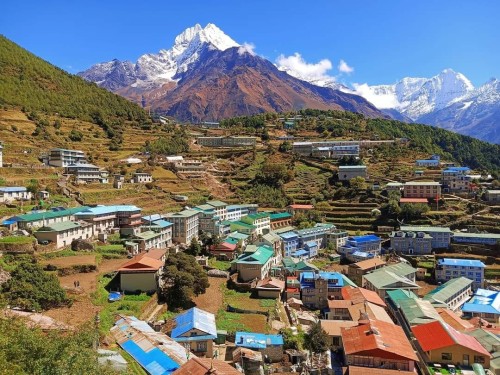
In Namche Bazaar, the bustling heart of Sherpa culture, the snow-dusted rooftops contrast against the cobalt sky, and yaks, loaded with provisions, clamber along the cobbled paths. The famed Namche acclimatization day becomes a sensory feast—a chance to wander through the alleys of bakeries scented with fresh bread, to sip tea on a sunlit terrace while absorbing the grandeur of Thamserku and Kongde peaks. From here, the trek ascends ever higher, the forests thinning out, yielding to windswept fields and the first glimpses of Ama Dablam, standing like a sentinel of grace.
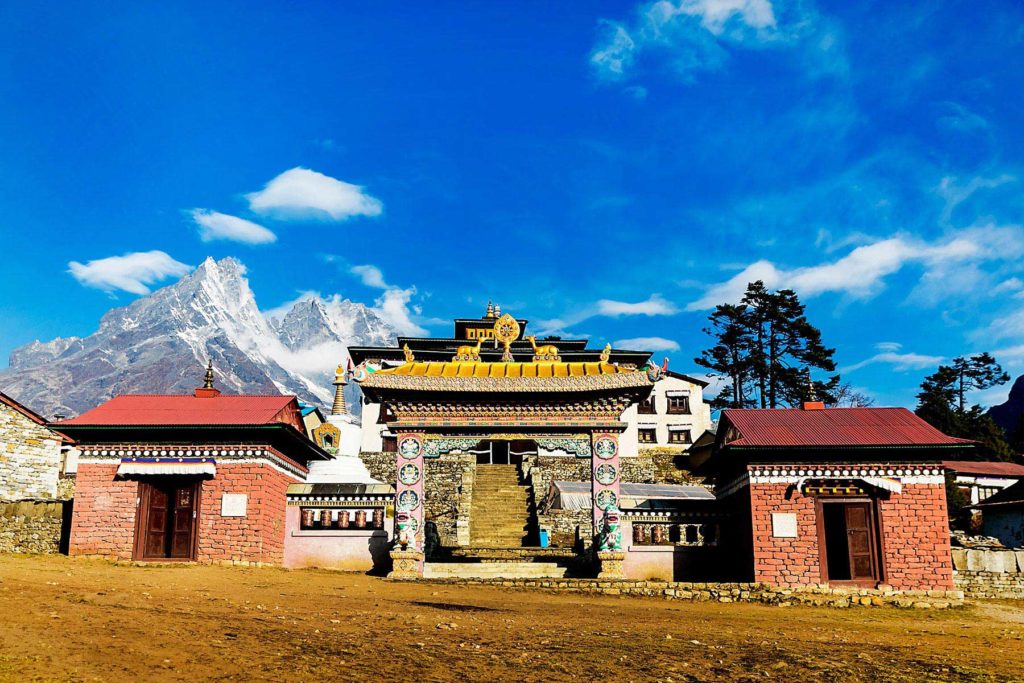
Above Tengboche Monastery, where the silence is almost a tangible presence, the snow crunches beneath your boots, every step resonating with the altitude. The flutter of prayer flags in Tengboche is a kaleidoscope of colors against the white-draped Himalayas, and the monks' chants reverberate through the thin air like echoes of an ancient promise. The journey climbs past barren moraine and glacial outwash, where the wind speaks a language of its own—at once fierce and introspective.
Approaching Dingboche, the air becomes thinner, each breath a deliberate act, a testament to the body’s resilience and the mind’s determination. The nights are cold, the stars piercingly bright, and the Milky Way spills across the sky in a celestial river. March’s quiet isolation lends a profound serenity, and you find yourself enveloped in a world pared down to its raw essence: the crunch of ice underfoot, the whisper of wind through the valleys, and the immovable silhouettes of the giants that surround you.
Beyond Lobuche and Gorak Shep, the final approach to Everest Base Camp unfurls across a desolate landscape of rock and ice. Khumbu Glacier groans beneath the midday sun, its surface a chaotic jumble of crevasses and towering seracs. The wind carries a chill from Everest’s upper reaches, yet there is a thrill, a pulse of anticipation, for here, the journey culminates not just in altitude but in experience. Base Camp itself is a celebration of human endeavor, a tapestry of colorful tents set against the austere beauty of the world’s highest peak. The peak of Everest looms above, shrouded in an ephemeral veil of cloud, a reminder of the sublime heights that few dare to reach.
Descending the way back through the valleys, the path reveals new perspectives with every turn. The sense of accomplishment accompanies each downward step, mingling with the bittersweet realization that the world of stone and ice will soon give way to the gentler terrain of rolling hills and verdant valleys. With every return greeting of “Namaste,” the journey closes its circle, ending not with the suddenness of an aircraft landing, but with the gradual unfolding of landscapes that you now know intimately.
In choosing to trek to Everest Base Camp without the rush of flight, you gain not just time, but a deep communion with the land. March’s changing light and evolving weather cast the trek in a myriad of moods, from clear dawns that paint the peaks gold to evening mists that drift like forgotten dreams. It is a journey that becomes a meditation—each day a verse, each step a word—etched into the epic poem of the Himalayas.
1# What is the starting point of the Everest Base Camp trek if I choose to drive instead of flying to Lukla?
For those avoiding the Lukla flight, the trek typically begins in Phaplu Salleri -paiya thamdanda. Travelers can take a road journey from Kathmandu to these starting points by jeep. Jiri offers a longer, more traditional trekking route, while Phaplu provides a shorter alternative with similar landscapes and cultural encounters.
2# How long does the trek take when starting from Phaplu Salleri or Paiya Thamdanda instead of Lukla?
Starting from Jiri extends the trek to around 15-18 days, while Phaplu shortens it to 15-18 days. The added days include trekking through lower altitude regions, which not only enhance acclimatization but also provide an authentic experience of the Solu region’s rural life and culture before joining the standard Everest Base Camp trail at Namche Bazaar.
3# What are the road and jeep conditions like in March, and what should I expect?
In March, the roads leading to Jiri and Phaplu can be bumpy and rugged due to recent winter weather. While the primary routes are navigable, it is advisable to be prepared for slow travel and occasional delays due to landslides or muddy conditions. Jeeps are typically the preferred vehicle due to their capacity to handle these challenging terrains.
4# Is March a good time for trekking to Everest Base Camp without flying to Lukla?
March is an ideal time for trekking in the Everest region as it marks the beginning of the spring season. The weather is generally clear, with moderate temperatures during the day and cool nights. March also sees fewer crowds compared to April and May, making it a great choice for a more peaceful trekking experience.
5# What are the altitude details and acclimatization points for this trek?
Starting from Jiri or Phaplu means beginning at a lower altitude (around ,2,469m at Phaplu) Salleri or paiya Thamdanda 2700m and gradually ascending through regions like Bhandar, Sete, and Junbesi. The highest points along the trek include:
Namche Bazaar (3,440m) – a crucial acclimatization stop.
Tengboche (3,867m) – with stunning monastery views.
Dingboche (4,410m) – another acclimatization point to prepare for higher altitudes.
Lobuche (4,910m) and Gorak Shep (5,140m) – the final stops before reaching Everest Base Camp (5,364m).
6# What are the accommodation and food options like when trekking without flying to Lukla?
Accommodation along the road journey is limited and basic, especially in villages like Jiri or Phaplu. Teahouses and lodges become more abundant as you enter the main trekking route. During March, most teahouses and lodges will be open, offering a variety of meals such as dal bhat, noodles, soups, and Tibetan bread. It is advisable to carry some extra snacks for the lesser-traveled areas before Namche Bazaar.
7# What are the key benefits of starting the trek by road instead of flying to Lukla?
Trekking from Jiri or Phaplu offers a gradual acclimatization process due to the lower starting altitude, reducing the risk of altitude sickness. It also allows trekkers to experience the beauty and culture of the Solu-Khumbu region, with picturesque villages, terraced fields, and local hospitality. Additionally, it eliminates the unpredictability of Lukla flights, which are often delayed or canceled due to weather conditions.
8# What are the physical and fitness requirements for the extended trek from Jiri or Phaplu?
The trek from Phaplu sallery or paiya thamdanda adds extra 2-days of trekking through challenging ascents and descents before reaching Namche Bazaar. A good level of fitness and stamina is recommended, as the trail includes multiple high passes and steep inclines. Prior trekking experience and endurance training will be beneficial to tackle the extended route.
9# What permits are needed for the Everest Base Camp trek when starting from Phaplu Salleri or Paiya Thamdanda ?
The required permits are:
TIMS (Trekkers’ Information Management System) Card – Available in Kathmandu and mandatory for all trekkers.
Sagarmatha National Park Permit – Required for entering the Everest region beyond Monjo.
Gaurishankar Conservation Area Permit – Necessary when starting the trek from Jiri as the route passes through this conservation area before reaching the Everest region.
10# What is the expected weather like in March, and what gear should I pack?
March weather is generally mild, with daytime temperatures ranging from 10°C to 15°C at lower altitudes and dropping to -10°C to -15°C at higher points like Gorak Shep. Packing essentials include a high-quality sleeping bag, layered clothing (thermal base layers, fleece, and a down jacket), trekking poles, and waterproof gear. Crampons may be required if there is residual snow or ice at higher elevations.
Everest Base Camp Trek by Road/Jeep - 15 Days
Recent From Blog


8th Sep, 2026

16th Aug, 2026

10th Aug, 2026

8th Aug, 2026

1st Aug, 2026

31st Jul, 2026

29th Jul, 2026
25th Jul, 2026

29th Jun, 2026
4th Jan, 2026


5th Jun, 2025

19th May, 2025

9th May, 2025

18th Apr, 2025

22nd Oct, 2024
21st Oct, 2024
19th Oct, 2024

18th Oct, 2024

11th Oct, 2024
11th Oct, 2024
8th Oct, 2024
