Any Inquiry
Join Group

Everest View Trek - 5 Days

5 Days
USD 875 USD 795
1 Review
Everest View Trek

Everest View Trek

USD 795 Per Person

From USD 875 To USD 795
  • Best price guaranteed
  • Book with confidence
  • Highly recommended agency

Trip At Glance

Duration

5

Max Altitude

3800

Best Season

Autumn & Spring

Transportation

Private Car Flight

Accomodation

Hotel Lodge

Food

Breakfast, Lunch & Dinner

Overview and Highlights

Everest View Trek 2027–2028 | Short Everest Trek, Sherpa Culture & Himalayan Views

The Everest View Trek 2027–2028 is one of Nepal’s finest short Himalayan adventures, designed for travelers who dream of seeing Mount Everest without undertaking the longer and more demanding Everest Base Camp Trek. This scenic journey takes you deep into the legendary Khumbu region, where spectacular Himalayan panoramas, authentic Sherpa villages, ancient Buddhist traditions, rhododendron forests, suspension bridges, and warm teahouse hospitality come together in one unforgettable experience. It is an excellent choice for travelers with limited time, families, first-time trekkers, and anyone seeking a moderate introduction to the Everest region.

The adventure usually begins with an exhilarating mountain flight from Kathmandu to Lukla, the famous gateway to Everest. From Lukla, the trail follows the Dudh Koshi River through peaceful mountain landscapes, pine and rhododendron forests, traditional settlements, and suspension bridges decorated with colorful Buddhist prayer flags. Gradually ascending through the Khumbu foothills, the route reaches Namche Bazaar, the vibrant Sherpa capital and commercial center of the Everest region. Along the way, trekkers encounter stone-built houses, mani walls, chortens, spinning prayer wheels, yak caravans, and dramatic views of the surrounding Himalayan peaks.

The main highlight is the hike toward the Everest View Hotel, situated above Namche Bazaar at approximately 3,880 meters. From this famous viewpoint, trekkers can enjoy an extraordinary panorama of Mount Everest, Ama Dablam, Lhotse, Thamserku, Kongde Ri, and other Himalayan giants. Depending on the itinerary, the trek can also include a visit to Tengboche Monastery, one of the most important Buddhist monasteries in the Khumbu. Surrounded by towering peaks, prayer flags, and peaceful mountain landscapes, Tengboche adds a deeply spiritual dimension to the journey. The Everest View Trek delivers the essence of the Everest region in a shorter timeframe, without requiring trekkers to reach extreme altitudes such as Everest Base Camp.

Panoramic Views of Mount Everest and the Himalayas

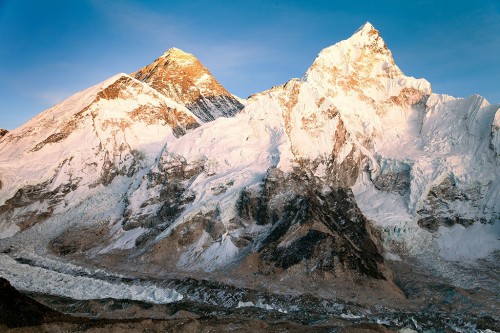
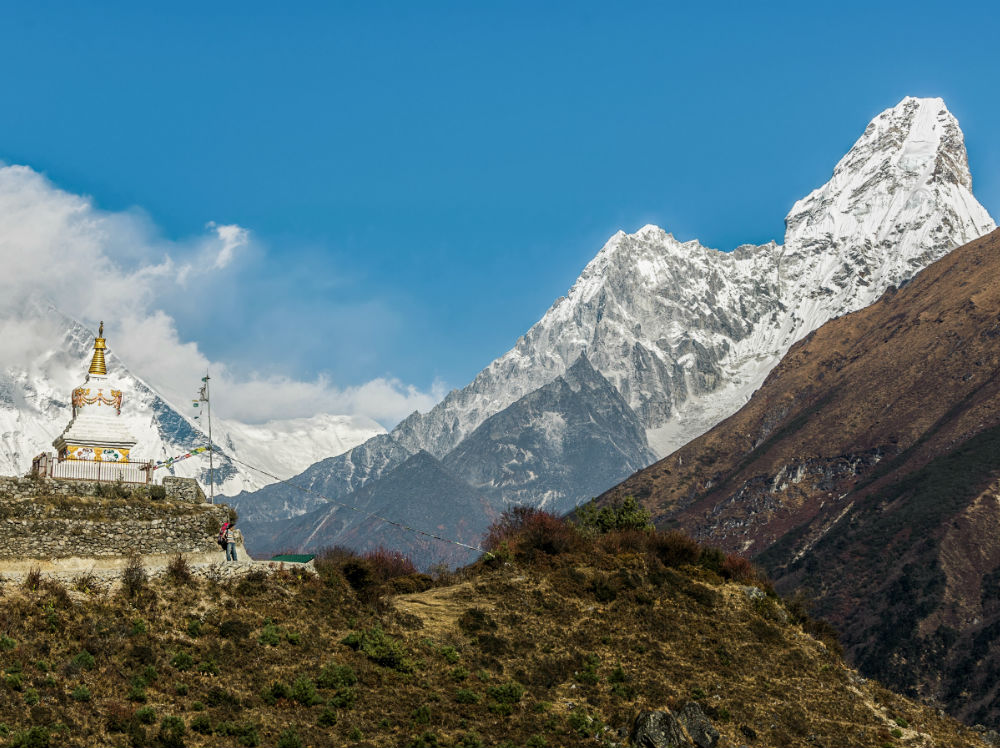
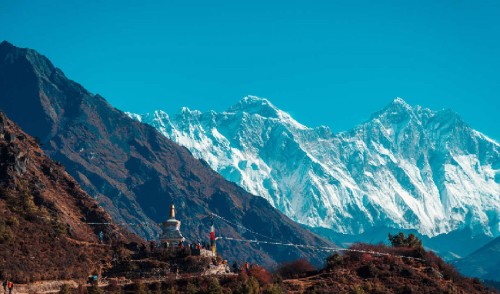
The greatest attraction of the Everest View Trek is its spectacular Himalayan panorama. From the trails around Namche and the Everest View Hotel, trekkers can admire some of the world's most famous mountains, including Mount Everest, Ama Dablam, Lhotse, Thamserku, and Kongde Ri.

The scenery changes dramatically as the trail climbs higher. Forested valleys gradually give way to open alpine landscapes, while enormous snow-covered peaks rise above the horizon. The Everest View Hotel provides one of the most rewarding viewpoints of the trek, allowing travelers to enjoy magnificent mountain scenery without the extended commitment required for a full Everest Base Camp expedition.

For photographers, the route offers exceptional opportunities to capture Himalayan sunrises, traditional villages, prayer flags, suspension bridges, monasteries, yaks, and dramatic mountain landscapes. Every section of the trail contributes to the unforgettable visual experience.

Scenic Flight to Lukla

The adventure begins with one of Nepal's most exciting travel experiences—the flight from Kathmandu to Lukla. The journey offers aerial views of Nepal's rolling hills, deep valleys, rugged ridges, and Himalayan landscapes before reaching Lukla, situated at approximately 2,860 meters.

The arrival at Lukla immediately introduces travelers to the unique atmosphere of the Everest region. From here, the busy energy of Kathmandu disappears and the journey becomes a peaceful Himalayan walking adventure. The trail gradually follows the Dudh Koshi valley toward Phakding and Namche Bazaar.

Flight schedules in the Everest region can be affected by mountain weather, particularly outside the main trekking seasons. Travelers should therefore allow some flexibility in their itinerary and consider an additional buffer day when planning an Everest region trek.

Namche Bazaar – Gateway to Everest

Namche Bazaar at approximately 3,440 meters is one of the most famous settlements in the Khumbu region and an essential stop on the Everest View Trek. Built into a natural mountain amphitheater, Namche serves as a commercial, cultural, and trekking hub for the Everest region.

The town features teahouses, lodges, restaurants, bakeries, shops, trekking stores, and local markets. It is also an excellent place to experience Sherpa culture and Himalayan mountain life. Trekkers can explore the surrounding trails, interact with local communities, enjoy panoramic mountain views, and experience the unique atmosphere of a high-altitude Sherpa settlement.

Namche is also an important acclimatization point. A carefully planned itinerary allows travelers to spend sufficient time adjusting to the increasing elevation before continuing toward the Everest View Hotel.

Everest View Hotel – The Trek's Signature Viewpoint

The hike to the Everest View Hotel is the defining experience of this short Everest trek. Located above Namche at approximately 3,880 meters, the viewpoint offers a spectacular perspective of the surrounding Himalayan peaks.

On clear days, travelers can see Everest, Lhotse, Ama Dablam, Thamserku, and Kongde Ri rising dramatically above the Khumbu landscape. Enjoying a warm drink while looking toward Mount Everest creates one of the most memorable moments of the entire journey.

For travelers who want an Everest experience without trekking all the way to Base Camp, this viewpoint provides an excellent balance between adventure, scenery, altitude, and time.

Optional Tengboche Monastery Visit

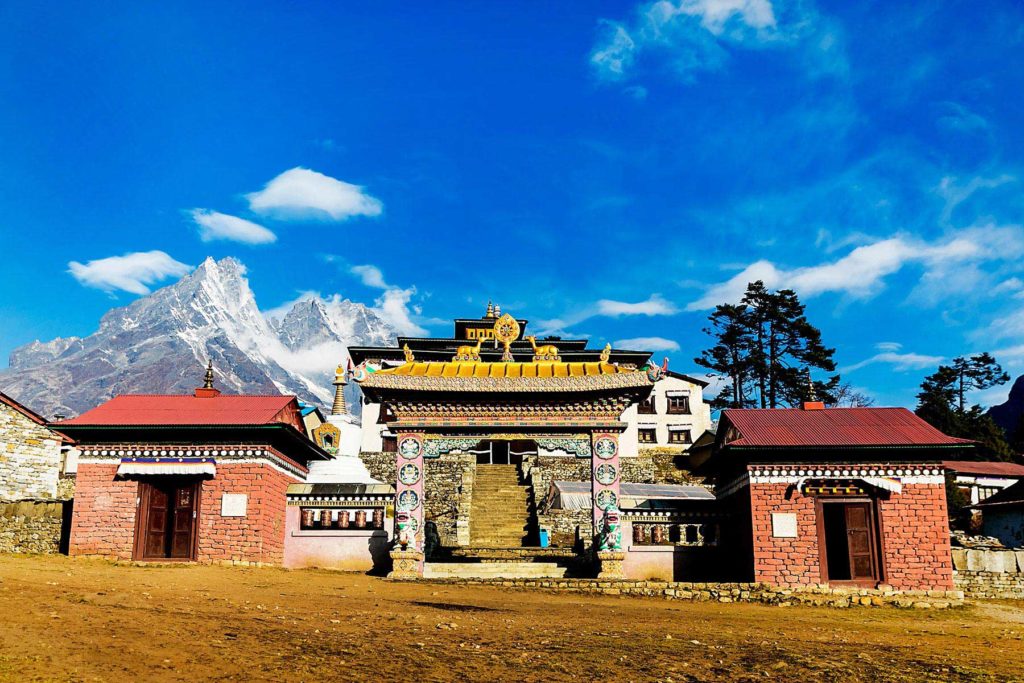
Depending on the chosen itinerary, travelers can extend their Everest View experience toward Tengboche Monastery, located at approximately 3,867 meters. Tengboche is an important spiritual center for the Sherpa communities of the Khumbu region and is renowned for its spectacular setting beneath the Himalayan peaks.

The monastery's peaceful surroundings, Buddhist architecture, prayer flags, mani stones, and spiritual atmosphere provide a meaningful cultural experience. Visitors may have the opportunity to observe Buddhist traditions and learn about the religious heritage that has shaped life in the Everest region.

Combining the Everest View experience with Tengboche creates an especially rewarding itinerary for travelers interested in both Himalayan scenery and Sherpa Buddhist culture.

Sherpa Culture and Himalayan Traditions

The Everest View Trek 2027–2028 offers far more than mountain scenery. Throughout the route, travelers encounter the distinctive culture of the Sherpa people, whose history and traditions are deeply connected with the Himalayas.

Stone houses, colorful prayer flags, chortens, mani walls, prayer wheels, Buddhist monasteries, and yak caravans are common sights along the trail. Villages such as Phakding and Namche provide opportunities to observe traditional mountain life while staying in locally operated teahouses.

The warmth and hospitality of the Sherpa communities add a special character to the trek. Sharing meals in a teahouse, walking through traditional settlements, and learning about local Buddhist customs can make the journey as culturally memorable as the mountain views.

Rhododendron Forests and Himalayan Nature

The lower sections of the Everest View Trek pass through beautiful pine, fir, and rhododendron forests. During spring, rhododendron blossoms bring vivid color to the trail, contrasting beautifully with the green forest and distant snow-covered peaks.

The sound of flowing rivers, birdsong, yak bells, and mountain winds creates a peaceful natural environment. Suspension bridges crossing the Dudh Koshi and its tributaries add an adventurous element to the journey.

The combination of forests, rivers, wildlife habitats, traditional villages, and high Himalayan landscapes makes the Everest View Trek an excellent choice for travelers who want to experience the diverse natural environment of the Khumbu region.

Moderate and Accessible Himalayan Adventure

Compared with the Everest Base Camp Trek, the Everest View Trek is generally shorter and involves less time at extreme altitude. It is therefore an attractive option for travelers seeking a short Everest trek for beginners, families, older travelers, or visitors with limited vacation time.

However, the route still reaches elevations approaching 4,000 meters, so travelers should not underestimate the importance of gradual acclimatization. Regular walking and cardiovascular exercise before the trek can improve comfort and endurance.

The trek does not require technical climbing skills. A reasonable level of fitness, proper preparation, appropriate clothing, and a steady walking pace are usually more important than previous high-altitude trekking experience.

Teahouse Accommodation and Local Hospitality

Accommodation during the Everest View Trek is generally provided in local teahouses and mountain lodges. These provide a comfortable and authentic way to experience life in the Khumbu region.

Rooms are usually simple, often with twin beds and shared facilities. Dining rooms become welcoming places to relax after a day of walking, enjoy traditional Nepali and international meals, and meet fellow trekkers from around the world.

The combination of basic mountain comfort and genuine local hospitality makes the teahouse experience an important part of the Everest View Trek.

Best Time for Everest View Trek 2027–2028

The best seasons for the Everest View Trek 2027–2028 are generally spring (March–May) and autumn (September–November). These periods usually offer favorable trekking conditions, comfortable daytime temperatures, and good opportunities for clear Himalayan views.

Spring is particularly attractive for rhododendron flowers and fresh mountain landscapes, while autumn is widely preferred for clear skies and excellent visibility. Winter can provide crisp mountain views and fewer trekkers, although temperatures are considerably colder. The monsoon season can bring clouds, rain, and flight disruptions, so travelers should consider seasonal weather carefully.

Everest View Trek 5–7 Days: Perfect for Limited Time

The Everest View Trek can be organized in approximately 5 to 7 days, depending on the itinerary, acclimatization requirements, flight schedules, and whether travelers include Tengboche or additional viewpoints.

This makes it ideal for people who want to experience the Everest region without spending two or more weeks on the trail. Within a relatively short journey, trekkers can experience Lukla, Phakding, Namche Bazaar, Everest View Hotel, Sherpa villages, Buddhist culture, rhododendron forests, and spectacular Himalayan panoramas.

Why Choose Everest View Trek 2027–2028?

The Everest View Trek 2027–2028 is the perfect balance between Himalayan adventure and practical travel. It offers breathtaking views of Mount Everest, an exciting Lukla flight, the vibrant Sherpa culture of Namche Bazaar, peaceful Buddhist monasteries, beautiful forests, suspension bridges, and comfortable teahouse stays—all without the long and demanding journey to Everest Base Camp.

For travelers seeking a short Everest trek, beginner-friendly Himalayan adventure, family trekking experience, or scenic Nepal trekking package, this route offers outstanding value. Booking directly with a trusted local trekking company such as Adventure Nepal Eco Treks Pvt. Ltd. can provide experienced government-licensed guides, transparent local prices, transportation and accommodation arrangements, and personalized support throughout the journey.

The Everest View Trek is not simply a shorter alternative to Everest Base Camp—it is a complete Himalayan experience in its own right, bringing you close to the world's highest mountains while allowing you to discover the culture, nature, spirituality, and timeless beauty of the Khumbu region in 2027–2028.

Note: All the Domestic airlines flights to Lukla operated via Ramechhap-Manthali- Airport from the 1st of October 2022

Day to Day Itinerary

Day 1 : Flight from Kathmandu to Lukla & Trek to Phadking

The flight from Kathmandu to Lukla is not merely a journey—it is a passage into a realm where the earth reaches for the heavens. As the small aircraft lifts from the tarmac, the bustling capital of Nepal shrinks below, and soon the snow-capped Himalayas rise to greet you, their jagged peaks piercing the sky. The air hums with the thrill of anticipation, the vast wilderness ahead unfolding in glimpses through the windows.

Lukla’s airstrip appears as if carved into the mountainside, a narrow ribbon of earth suspended between the earth and sky. Stepping off the plane, the air feels different—crisp, clean, and filled with the scent of pine and adventure.

The trek to Phakding 2660m begins quietly, a gentle descent through forests of rhododendron and pine, past cascading streams and prayer stones inscribed with ancient mantras. The path is a dance of light and shadow, with the Dudh Koshi River glimmering below. Stone houses with colorful roofs dot the landscape, and yaks, heavy with goods, move slowly along the trail. Each step feels deliberate, as if the mountains themselves are whispering, drawing you deeper into their embrace. By the time you reach Phakding, the mountains already feel like home.

Food Breakfast, Lunch & Dinner
Day 2 : Trek from Phadking to Namche Bazaar

The trek from Phakding to Namche Bazaar is a journey that winds deeper into the heart of the Khumbu region, where the mountains loom larger and the path seems to carry the whispers of ancient travelers. From the moment your boots touch the trail, the Dudh Koshi River becomes your constant companion, its waters rushing with an urgency that mirrors the pulse of the mountains themselves. You cross swinging suspension bridges draped in prayer flags, their vibrant colors fluttering in the breeze, carrying whispered hopes to the peaks above.

The air is cooler now, the altitude slowly making its presence known, and with every step, the landscape transforms. The trail ascends steeply, cutting through forests thick with pine and rhododendron, their scent a balm to the senses. Around every bend, the mountains reveal themselves, snow-capped giants standing sentinel over the land, their white summits glittering in the clear Himalayan light.

As you climb higher, the world seems to quiet, save for the occasional sound of yak bells and the soft murmurs of fellow trekkers. And then, like a hidden jewel, Namche Bazaar appears—nestled into the hillside, its terraced buildings cascading down the slope in a riot of color. The town feels like a sanctuary, a place where the modern world meets the ancient, and where the spirit of the mountains seems to linger in the air.

Reaching Namche is a triumph, not just of body, but of soul. From here, the towering presence of Everest feels closer, and the promise of the Himalayas more profound.

Food Breakfast, Lunch & Dinner
Day 3 : Today acclimatize at Namche Bazaar.

Today is not a day of distance measured in footsteps, but one of quiet communion with the mountains as you acclimatize in Namche Bazaar. Here, in this amphitheater of peaks, time slows down. The bustling energy of trekkers, the soft murmur of Sherpa life, and the flutter of prayer flags overhead blend into a melody that feels timeless.

Namche, cradled in the heart of the Khumbu, invites you to pause, to listen. As the sun rises over the ridges, casting a golden glow upon the terraced village, the surrounding giants—Everest, Lhotse, Ama Dablam—stand in majestic silence, their icy summits piercing the heavens. With every breath, the crisp mountain air fills your lungs, an exchange with the high-altitude world that is both humbling and exhilarating.

A short hike up to the viewpoints rewards you with sweeping vistas of the Himalayas, where the snow-capped peaks stretch endlessly into the distance. Here, in the thin air, the mind clears, and the heart swells with the vastness of it all.

Namche offers more than just a chance to adjust to the altitude—it offers a moment to connect with the spirit of the Himalayas, to find stillness amid the grandeur, and to prepare both body and soul for the path that lies ahead.

Food Breakfast, Lunch & Dinner
Day 4 : Trek from Namche to Lukla

The trek from Namche Bazaar to Lukla is a bittersweet descent, a journey that feels like a farewell to the towering giants and ancient trails that have cradled your spirit. As the first light of dawn breaks over the ridges, Namche stirs awake beneath the ever-watchful gaze of Everest, the air crisp and laced with the scent of pine. Your footsteps echo softly on the stone paths as you begin the winding descent, each step carrying the weight of memories formed in the shadows of the world's highest peaks.

The trail dips through emerald forests, where rhododendrons and junipers sway gently in the breeze. The gurgling Dudh Koshi River once again greets you, its waters shimmering beneath the suspension bridges festooned with prayer flags, vibrant splashes of color against the rugged wilderness. The mountains, once close and imposing, begin to retreat, but their presence lingers in the cool air, a reminder of the heights from which you've come.

Villages and tea houses, now familiar, appear along the trail like old friends bidding you farewell. The warmth of Sherpa smiles and the rhythmic jingling of yak bells offer solace, grounding you in the simplicity of life in these remote highlands. As the day stretches on, Lukla emerges in the distance, a small outpost on the edge of the Himalayas, perched between the clouds and the earth.

Arriving in Lukla feels like the closing of a chapter. The wild, untamed beauty of the mountains gives way to the hum of the town, yet their spirit lingers in the air. Though the peaks fade from view, they leave an indelible mark, not just in the aching of your legs or the crisp mountain air in your lungs, but in the quiet, reverent place they’ve carved in your heart. This journey, from Namche to Lukla, is a return not just to the lowlands, but to yourself, with the Himalayas now a part of your soul, forever towering within.

Food Breakfast, Lunch & Dinner
Day 5 : flight from Lukla to Kathmandu

The flight from Lukla to Kathmandu is a final, fleeting brush with the mountains—a passage from the world of giants to the valley of humankind. As the small plane shudders to life on the precarious airstrip, the earth beneath seems to hold its breath, and the peaks, now distant, stand like silent sentinels, bidding you a quiet farewell. The air is cool and sharp, filled with the scent of pine and altitude, the sky above vast and impossibly blue.

The moment the plane lifts off, the mountains unfold beneath you, a sea of jagged white summits and deep, shadowed valleys. Everest, majestic and aloof, recedes into the horizon, its crown lost in the shimmering haze of the morning light. You soar over the trails you once walked, the rivers you crossed, the villages that now seem like tiny dots of color against the rugged expanse of the Himalayas. Each peak, each ridge, each cloud-dappled valley holds a story, a memory, a whispered secret of the land that cradles the sky.

As the plane banks and descends, the sprawling chaos of Kathmandu emerges from the mist, a world far removed from the quiet reverence of the mountains. The city, vibrant and alive, calls you back to the pulse of life. Yet, in the quiet corners of your heart, the mountains remain—silent, eternal, and untamed. The flight from Lukla to Kathmandu is not just a return; it is the closing of a sacred chapter, with the soul of the Himalayas carried with you, forever imprinted on your spirit.

Food Dinner

What Is Included ?

  •  Domestic Airport pickup and drop by private car
  • Three  meals a (Breakfast, Lunch and Dinner) during the trek.
  • All accommodations during the trek.(Toilet will be outside from your room)
  • All necessary paper works Everest National park entry permit
  •  Trekking information management system (Tims) permit.
  • Flight from Kathmandu to Lukla, Kathmandu
  • A helpful, knowledgeable, friendly,well English speaking trained, government license holder guide With all his salary, food, drinks and insurance.
  • A Strong, helpful porter with proper equipment (one porter for two people
  • Assistant guide group size of more than 8 people in a group
  • Medical supplies (first aid kit will be available).
  • All government taxes and office expenses.
  • Suvenir : something from Nepal give you mmory for Long life
  • Company certificate after the successful trek
  • kathmandu-Lukla-kathmandu Domestic Airport tax
  • Everest view Trekking route map

What Is Excluded?


  • International airfare/Your Travel insurance
  •  Hotel/Lunch/ Dinner in Kathmandu
  • Tea/coffee/bottles/drinks/ Sweet things
  • Hot shower/Camera’s battery charge during the trek
  • Tips for Guide Porter
  • Additional cost by out of management control due to the landscape, weather condition, illness, government  strikes, and physical condition.

Route Map

Route Map

FAQs

The Everest View Trek – 5 Days is a short and rewarding Himalayan adventure designed for travelers who want spectacular Everest-region scenery without committing to the longer Everest Base Camp Trek. The journey takes you through the famous Khumbu Valley, Sherpa villages, Buddhist monasteries, rhododendron forests, suspension bridges, and traditional mountain settlements.

The highlight is reaching the Everest View Hotel, where you can enjoy impressive views of Mount Everest, Ama Dablam, Lhotse, Nuptse, Thamserku, and Kongde Ri. It is an excellent choice for travelers with limited time who still want an authentic Everest trekking experience.

Yes. The 5-day Everest View Trek is one of the more accessible ways for beginners to experience the Everest region. You do not need previous high-altitude trekking experience, but you should be comfortable walking several hours on consecutive days over uneven and occasionally steep Himalayan trails.

A reasonable level of fitness makes the trek more enjoyable. Regular walking, hiking, stair climbing, or cardio training before your trip can help prepare you for the altitude and daily walking.

The highest point is generally the Everest View Hotel at approximately 3,880 meters (12,729 feet) above sea level. Depending on the itinerary and optional excursions, you may also visit viewpoints or settlements at similar elevations.

Although this trek is shorter and lower than Everest Base Camp, altitude should still be taken seriously. Walking at a comfortable pace, staying hydrated, eating properly, and allowing your body to adjust are important for a safe and enjoyable journey.

Yes. Seeing Mount Everest is the main attraction of the trek. The clearest panoramic views are usually enjoyed from the Everest View Hotel and surrounding viewpoints near Namche Bazaar.

On clear days, you can also see spectacular Himalayan peaks including Lhotse, Nuptse, Ama Dablam, Thamserku, Kongde Ri, and other peaks of the Khumbu region. Mountain visibility is weather-dependent, so clear mornings generally provide the best photography opportunities.

A typical 5-day itinerary is designed to provide a compact Everest experience while allowing time to explore the major highlights.

  • Day 1: Fly from Kathmandu/Ramechhap to Lukla and trek to Phakding
  • Day 2: Phakding to Namche Bazaar
  • Day 3: Acclimatization and Everest View Hotel excursion
  • Day 4: Namche Bazaar to Lukla
  • Day 5: Fly from Lukla to Kathmandu/Ramechhap and continue to Kathmandu

The exact itinerary may be adjusted because of flight schedules, weather, trail conditions, and operational considerations.

The Everest View Trek is generally considered moderate in difficulty. The trail includes stone steps, uphill and downhill sections, suspension bridges, and several hours of walking each day.

The biggest challenge is not technical climbing but the combination of altitude, uneven terrain, and daily elevation changes. With proper preparation and a sensible walking pace, many physically active beginners can complete the trek comfortably.

The best seasons are generally spring (March–May) and autumn (September–November). These months usually offer favorable trekking conditions, clearer mountain views, and pleasant daytime temperatures.

Winter (December–February) can also provide exceptionally clear Himalayan scenery, although temperatures are much colder and snow can affect higher trails. Monsoon (June–August) brings rain, clouds, and possible flight disruptions, making conditions less predictable.

Yes. Even though the trek reaches only around 3,880 meters, acclimatization remains important. The itinerary normally includes time around Namche Bazaar, with an excursion toward the Everest View Hotel before returning to Namche.

This gradual approach helps your body adjust to increasing altitude. Trekkers should never ignore symptoms such as persistent headache, dizziness, unusual fatigue, nausea, or breathing difficulties.


The Everest View Hotel is one of the signature viewpoints on the short Everest trekking route. From this elevated location, trekkers can enjoy an impressive Himalayan panorama, including Mount Everest and Ama Dablam, depending on weather and visibility.

For travelers who do not have enough time for Everest Base Camp, reaching this viewpoint provides a memorable opportunity to experience the landscapes of the Khumbu without undertaking a two-week expedition.

Accommodation is generally provided in local teahouses and mountain lodges along the route. Rooms are typically simple, clean, and designed for trekkers, with shared facilities commonly available at higher elevations.

Staying in local lodges also gives travelers the opportunity to experience authentic Himalayan hospitality. Facilities become more basic as altitude increases, so travelers should expect a comfortable trekking experience rather than luxury accommodation.

Teahouses along the route serve a variety of trekking meals, including dal bhat, noodles, pasta, rice dishes, soups, potatoes, vegetables, eggs, Tibetan-style bread, momos, and other simple meals. Tea, coffee, hot lemon, and other beverages are also commonly available.

Dal bhat is particularly popular because it provides carbohydrates, protein, and energy for long walking days. Eating sufficient food and drinking plenty of fluids can help maintain energy at altitude.


Traveling with an experienced local guide is strongly recommended. A knowledgeable guide can assist with navigation, altitude awareness, accommodation arrangements, local culture, and unexpected changes caused by weather or trail conditions.

A porter can also make the trek significantly more comfortable by carrying your main luggage while you walk with a lighter daypack. For international travelers, booking through a reliable local trekking company can simplify permits, transportation, guides, accommodation, and logistics.


The Everest View Trek passes through the Everest/Khumbu region, where required entry permits and local trekking documentation apply. Requirements can change, so travelers planning for 2027–2028 should confirm the latest regulations before departure.

A professional trekking agency can arrange the applicable permits and explain the current requirements as part of the trekking package, helping you avoid unnecessary delays at checkpoints.


The standard Everest View Trek usually includes transportation arrangements for the Kathmandu/Ramechhap–Lukla flight, depending on the current flight operation and itinerary. Flight schedules are highly dependent on weather and operational conditions.

For 2027–2028, travelers should allow some flexibility because Himalayan weather can cause delays or cancellations. A reputable local agency can help coordinate alternative transportation or rescheduling when necessary.

Yes, provided they are physically capable of walking at altitude and have no medical restrictions that make high-altitude trekking unsuitable. The 5-day itinerary is particularly attractive to travelers who want an Everest experience without the longer duration of the Everest Base Camp Trek.

For older travelers or those concerned about strenuous walking, a private itinerary with a slower pace, experienced guide, and porter support can provide greater comfort. Anyone with medical concerns should obtain appropriate professional medical advice before trekking at altitude.

Essential equipment includes comfortable trekking shoes, warm layers, a waterproof jacket, thermal clothing, trekking trousers, gloves, hat, sunglasses, sunscreen, water bottle, personal medications, basic toiletries, and a small daypack.

Even during spring and autumn, temperatures can become very cold in the evening and early morning. Winter travelers should carry additional warm clothing. A sleeping bag suitable for the season can also provide extra comfort in mountain lodges.

Booking directly with Adventure Nepal Eco Treks Pvt. Ltd. provides travelers with a local trekking partner familiar with the Everest region and its logistics. Direct booking can offer clearer communication, transparent local pricing, and personalized assistance without unnecessary middlemen.

For 2027–2028, travelers can arrange the Everest View Trek with experienced government-licensed trekking guides, porter support, accommodation, permits, and transportation assistance according to the selected package. Secure online booking, transparent costs, and personalized service make the 5-day Everest adventure a practical choice for travelers seeking a short, authentic, and memorable Himalayan experience.

Additional Information

During the Everest base camp trek, you have a pretty wide selection of the food items on the tea houses menus which are originated and prepared by the local community, the names of the most common meals name given below.

Common Breakfast options - Tibetan Breads (a fried bread in oil, it’s also named by Gurung bread in Annapurna area), Chapati with Cheese (dry bread- a local wheat bread), Oatmeal, French toast with jam, honey and peanut butter, Corn Flakes, Hashed brown, fried, Scrambles and boiled eggs, pancakes, porridge with milk, Muesli, Vegetable items and any kind of hot drinks are available except espresso, Americano
Common Lunch options – different verity of Thukpa (noodle soup), Dahl and Bhat (Nepalese local meal), Momo’s (dumplings), Tibetan / chapatti bread, Marconi, Spaghetti, Sherpa Stew, a verity of soups, steaks, potatoes items, Sandwiches, Pizza, rice with curry, spring rolls, burgers and Pizza, yak steak and desserts items.
Common Dinner options- Momo’s (dumplings) different verity of Thukpa (noodle soup), Dahl and Bhat (Nepalese local meal), Tibetan / chapatti bread, Marconi, Spaghetti, Sherpa Stew, a verity of soups, steaks, potatoes items, Sandwiches, Pizza, rice with curry, spring rolls, Raman soups, burgers and Pizza, yak steak, desserts items, hot and cold drinks are available on the menus on tea house, the menu’s selected meals are fresh and healthy with hygienic specialists by the mountain for the mountain trekkers.On the tea houses, the menu has plenty of non-veg items are mentioned but officially any of the meats are not our list of recommendations because the meat in the mountain such as high areas is not sanitary and healthy. However, we would like to persuade you to avoid taking meat, Alcoholic drinks, and smoking.
Deseret and Snack options, - Rice Pudding, Apple pie, fruit snicker/ mars bar, popcorns, cake, and pastries, etc.
Hot Drink options – Varieties of hot drinks like black, milk coffees, black, mint, ginger, Green, lemon honey teas, hot chocolates, hot mango juice, hot oranges juice, hot pineapple juice.

Trip Reviews (1)

“The most scenic Everest trek ever with the most reliable trekking agent.”

16th Mar, 2022

Nepal, the country that we had been hoping to visit since many years ago. A mystical country to us and many of other people. We had our travel plan studied a year before we come into decision for flight ticket purchasing. We were lucky that AirAsia finally launched is Nepal route from Malaysia with promotion fare. We were 4 of us traveling from Penang Island (Malaysia). We bought our flight ticket with low cost airline AirAsia somewhere in Sept 2012 with flying route of PEN-KUL-KTM-KUL-PEN.

PEN-KUL-PEN was with AirAsia and KUL-KTM-KUL was with AirAsiaX and at the same time we contacted Mr. Devi Baral the Managing Director from ANET via email about the trekking trip for Everest Mini Trek. His spontaneous email response with good English writing gave us very good impression about the reliability of this company. We were having close in touch with him through email until our departure date of 27 Apr 2013. Throughout the email responses, Devi Baral did an excellent job by replying our inquiries with detail which are very helpful for us as the first timer to visit Nepal. From his email replying which had built up our confident level to visit our inaugural Himalayan country and showing the good personality of himself as Nepalese. They are friendly and helpful people.

On 27 Apr 2013, our flight departed on time from Penang to KL-LCCT then again to Kathmandu. We were then pick up from Devi's arranged transport and safely arrived in Hotel Access Nepal. Room was OK with clean toilet, WIFI signal is only good in lobby. Breakfast from this hotel was ok, importantly the service was excellent and helpful waiters. Electricity in Nepal is expensive, therefore, this hotel practices cost saving by resuming its power starting from 4:30pm local time daily which we understand from the hotel staff. No big deal as Apr/May still a cool month in Kathmandu. Hot water was running fine in this hotel as well.

Thamel, the place where this Hotel Access Nepal located was excellent. You may shop till you drop and eat till you bloat. Devi met us up at hotel lobby that evening and we were brought to Himali restaurant for our dinner which was serving very tasty Nepalese food called "Dal Bhat" Literally, "Dal" means lentils and "Bhat" means rice in Nepalese language. It's not just purely the lentils with plain rice but with some delicious side dishes such as chicken curry & other vegetables as well. Himali restaurant is just about 150m walking distance from Hotel Access Nepal. Right after walking out from the main gate of the hotel walked straight until seeing the huge Coco-cola signboard then turn left into the the narrow alley which selling lots of beanie.

After the dinner, we were then brought to Devi's office for trekking permit registration as well as full payments. Thanks for the shirt as well as the complimentary Everest Map. Thereafter, we were then back to the room to relax, met up Devi again before our bedtime. We were introduced by him our trekking guide Mr. Kumar Khadka. That evening, both Devi & Kumar were brief us on our trekking trip.

On 28 Apr 2013, we were departed from Kathmandu domestic airport as per plan to Lukla with Tara Air AKE twin otter. Flight journey took us about 25mins along the scenic Himalayan mountainous view from the left side of the aircraft. We were lucky to have a clear morning to fly and safely landed at one of the world deadliest Lukla Tenzing-Hillary Airport with 2,850m asl. From there we started our trek all the way to Benkar. Then we overnight in Benkar at Waterfall Hotel overlooking Tamserku snowy mountain.

Kumar our trekking guide was very considerate and booked us the top floor of twin bedroom. The room is clean and beautiful Tamserku peak just directly view from our window. That starry night sky was so clear with moonlight shined into our bedroom. Trekking journey continue the next morning all the way to Namche Bazaar @ 3,440m asl. and we remained in Namche Bazaar for 2 nights. Again, Kumar booked us the top floor twin bedroom with scenic view overlooking Kongde peak. Between the days in Namche Bazaar we did a day trek to Everest Hotel at Syangboche also the small little Namche Bazaar monastery. Trek to Syangboche is a MUST do trek which we were stunt with the world highest peak of Everest, Lhotse & Amadablam. We were speechless with the beauty of mother earth when we were there.

After 2 days in Namche Bazaar, we started our descend back in Benkar where we stayed for the 1st night of trek. Then the following day we continued the final trek back in Lukla and spent our last night of trek there. Day after, we caught our flight back to Kathmandu from Lukla. Upon arriving in Lukla, we were back in Hotel Access Nepal for the final night before heading back to Malaysia. Final day we did a few places sightseeing such as Pashupatinath, Swayambunath (Monkey Temple) & Kathmandu Durbar Square.

On the final night, we were glad being invited by Mr. Devi for his generosity to dine with his family & relatives at home. Although it was just the 1st time we had dinner with them, but the excellent hospitality just made us felt that we had been known each other for decade. That's the precious moment that money can't buy.

Although it was a budget trip throughout the trekking journey, the trekking guide Kumar just made us felt that we were being treated as friend rather than client. Lots of chats & fun which made the strenuous trek a rewarded & easy one. We really appreciate from our heart. Without him our trekking trip probably may not be the happiest one. A million thanks to Kumar for his guidance. Also, not to forget the 2 jovial and fun porters from Lukla.

We would described Devi as a very well organized and knowledgeable person in term of trekking trip planning. He has jovial and friendly personality.

For our trekking guide Kumar Khadka, he is the best ever trekking guide we ever experienced throughout our 10+ years non-stop travelling experiences. He's honest, caring, jovial and helpful person. Along the trekking trip he has find many ways helped us to save lot of unnecessary expenses. With his trekking experience, we learn a lot from him about mountain life.

We are now looking forward to join his next adventure to Annapurna Base Camp in near future!! Counting down for the next trip with them. :)

Tips form Malaysian

You can send your enquiry via the form below.


Similar Trips

Everest Base Camp Trek

Nepal , Everest Region Trekking

Everest Base Camp Trek - 15 Days

US$ 1395/Person
50 Reviews
Everest Kalapathar Trek

Nepal , Everest Region Trekking

Everest Kalapathar Trek - 13 Days

US$ 1275/Person
Everest View Trek

Nepal , Everest Region Trekking

Everest View Trek - 5 Days

US$ 795/Person
1 Review
Gokyo Kalapathar Trek

Nepal , Everest Region Trekking

Gokyo Kalapathar Trek - 17 Days

Gokyo Cho La Pass Trek

Nepal , Everest Region Trekking

Gokyo Cho La Pass Trek - 15 Days

US$ 1395/Person
Everest Renjo-La Pass Trek

Nepal , Everest Region Trekking

Everest Renjo-La Pass Trek - 11 Days

US$ 1095/Person
Ghorepani Poon Hill Trek

Nepal , Everest Region Trekking

Ghorepani Poon Hill Trek - 2 Days

US$ 235/Person
Everest Panorama Trek

Nepal , Everest Region Trekking

Everest Panorama Trek - 7 Days

US$ 995/Person
6 Reviews

USD 795 Per Person

From USD 875 To USD 795
  • Best price guaranteed
  • Book with confidence
  • Highly recommended agency

Want To Plan For Trekking Package ?